Shortage as Signal: When Does Scarcity Become Investable Demand in Iran?
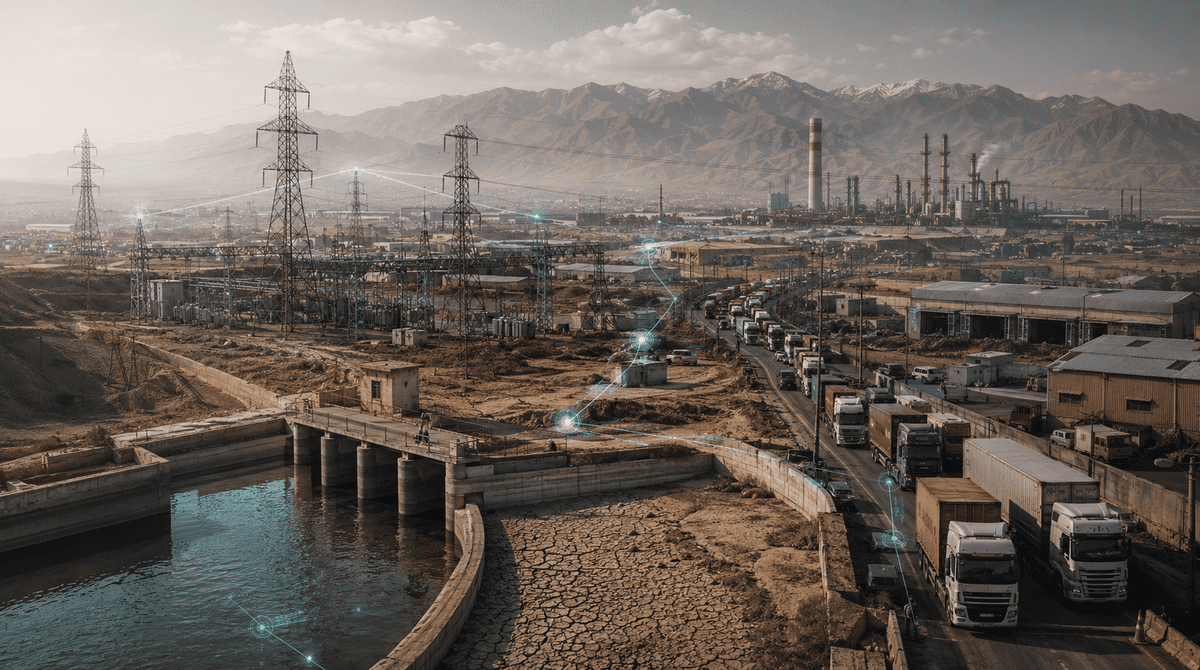
Iran has many visible shortages: power, water, logistics, infrastructure, data, technology, finance, and urban services. For an investor, this can look like a map of opportunity. Wherever the system is under pressure, there seems to be room for capital, technology, execution, and better management.
But that assumption is dangerous.
A shortage proves that a problem exists. It does not prove that a market exists.
A market exists only when someone is willing and able to pay for a solution. An investment opportunity exists only when that payment can support a workable model, legal operation, reliable delivery, and a credible path for capital recovery.
This is the central discipline of shortage-driven investing in Iran.
The country’s gaps are real. Some are urgent. Some affect households directly. Others appear inside factories, farms, ports, hospitals, municipalities, and supply chains. But not every shortage can absorb private capital. Some are trapped by weak tariffs, public-sector payment delays, unclear permits, political sensitivity, poor data, or customers who need the solution but cannot afford it.
A shortage is not an opportunity until someone can pay, someone can build, and someone can legally operate.
The goal is not to romanticize scarcity. It is to read scarcity correctly.
The mistake: confusing a problem with a market
Many investors are attracted to large problems because large problems feel like large markets. In Iran, this can be especially tempting. If electricity shortages affect production, there must be opportunity in power. If water stress is visible, there must be opportunity in water. If logistics are inefficient, there must be opportunity in warehousing, cold chain, and freight systems.
Sometimes this is true.
But the first test is not the size of the problem. It is the structure of payment.
A factory that loses production hours because of unreliable power may have a direct financial reason to pay for backup generation, energy efficiency, or self-supply. A municipality that needs better waste management may have a real public need but a weak budget, slow procurement, and uncertain payment. A farming region may need smart irrigation, but if farmers cannot finance equipment, the model may require leasing, subsidies, cooperatives, or an anchor buyer.
The same shortage can therefore produce very different investment outcomes.
The key question is not “Is the problem real?”
The better question is: “Who loses money because of this shortage, and can they pay to reduce that loss?”
That question separates visible need from investable demand.
The five-filter test
Every shortage-driven opportunity in Iran should pass through five filters.
The first is demand. The need must be real, repeated, and costly. A one-time inconvenience is not the same as a structural bottleneck. The stronger the measurable cost — downtime, spoilage, lost sales, higher operating expenses, service failure, or production loss — the stronger the demand signal.
The second is the payer. Someone must have both willingness and ability to pay. The payer may be a factory, hospital, logistics company, exporter, municipality, household, farmer, developer, or government agency. If the person who benefits from the solution is not the person who pays for it, the model becomes more complex.
The third is regulation. Many shortage-related sectors in Iran are regulated, permitted, price-sensitive, or politically visible. Power generation, water supply, land use, waste, ports, telecom, transport, municipal services, and public procurement all depend on rules that shape the business model. Regulation is not a side issue; it is part of the opportunity.
The fourth is delivery. A solution must be buildable and operable. Technology alone is not enough. The investor needs contractors, local partners, spare parts, maintenance capacity, staff, permits, supply chains, and operating discipline. In infrastructure, the return often depends less on installation and more on long-term reliability.
The fifth is capital return. The investor must know how money comes back. This may happen through service fees, operating cash flow, leases, savings-sharing, offtake contracts, project sale, refinancing, dividends, or reinvestment. If the exit path is unclear, the shortage may be real but the investment case remains incomplete.
These five filters turn a headline problem into an investment question.
How this applies to Iran’s major gaps
Power shortages are one of the clearest examples. The need is obvious, but the opportunity depends on the payer. Industrial users may pay for backup power, efficiency systems, solar, storage, or dedicated supply if outages create measurable losses. A household need may be widespread but harder to monetize at scale. A grid-level project may be large but dependent on tariffs, permits, offtake terms, and public-sector payment.
Water scarcity is more complex. It creates demand for treatment, reuse, leakage reduction, desalination, industrial water management, and smart irrigation. But water is politically sensitive and pricing is often difficult. Industrial water solutions may be more bankable when factories can measure the cost of disruption. Agricultural solutions may need financing models because farmers often cannot absorb upfront costs. Municipal water projects may have high social value but depend heavily on procurement and payment reliability.
Logistics gaps are often more investable because the cost of inefficiency can be measured by private actors. Delays, spoilage, inventory losses, unreliable delivery, fragmented warehousing, and weak cold chain all create direct costs. This can support opportunities in storage, freight management, cold chain, port-adjacent services, inland logistics, route optimization, and last-mile systems. The strongest cases are those where customers already lose money from poor reliability.
Urban and public-service needs are large but require more caution. Waste management, traffic systems, public transport, parking, municipal software, public lighting, and service infrastructure may all be needed, but they often depend on municipalities, concessions, procurement rules, and public budgets. These projects can work, but only if payment rights and operating responsibilities are clearly structured.
Technology and data gaps are less visible but may be highly attractive. Factories need monitoring. Retailers need inventory systems. Logistics firms need fleet tools. Clinics need management software. SMEs need accounting, sales, and procurement systems. These are not infrastructure projects in the traditional sense, but they can solve expensive operational problems. The key is monetization. A tool is investable only when customers pay because it reduces cost, increases reliability, improves compliance, or unlocks revenue.
The lesson is the same across sectors: shortage creates the opening, but structure creates the opportunity.
When shortage is not investable
Some shortages should not attract capital unless the structure changes.
The first warning sign is no payer. If the need is real but no customer can pay, the opportunity may require public funding, grants, subsidies, or development finance rather than ordinary private investment.
The second warning sign is uneconomic pricing. If tariffs or service prices are set below cost and there is no compensation mechanism, even a necessary project can become financially weak.
The third warning sign is unclear permission. Projects involving land, power, water, waste, transport, telecom, or public services can fail if permits are uncertain or politically exposed.
The fourth warning sign is a single slow-paying customer. Government or municipal contracts can be large, but delayed collection can damage project economics.
The fifth warning sign is weak local execution. Infrastructure and service projects usually require local partners, technical teams, maintenance capacity, procurement knowledge, and relationships with authorities. A poor partner can turn a real shortage into a failed project.
The sixth warning sign is technology without a business model. Many solutions sound impressive because they address real problems, but if users do not pay or savings cannot be captured, the model remains weak.
A shortage becomes investable only when the problem, payer, regulation, delivery, and return path align.
The investor’s decision framework
The cleanest way to evaluate shortage-driven opportunities in Iran is to start with the pain and move toward the model.
First, identify who suffers from the shortage. Is it a factory, household, farmer, logistics company, hospital, municipality, port operator, exporter, or developer?
Second, estimate the cost of the shortage. Does it cause downtime, waste, lost revenue, higher costs, customer loss, safety risk, or regulatory pressure?
Third, identify the payer. Is the payer the same as the beneficiary? Can they afford the solution? Do they already pay indirectly through losses?
Fourth, test the legal route. What permits, licenses, land rights, tariffs, procurement rules, environmental approvals, or import restrictions apply?
Fifth, test delivery. Who builds, installs, maintains, and operates the solution? Are parts, skills, fuel, power, software, and local support available?
Sixth, define the return path. Does the investor earn through usage fees, service contracts, leases, cost savings, offtake, public contracts, sale, refinancing, or dividends?
If these questions produce clear answers, scarcity may be pointing to investable demand. If they do not, the shortage is still a problem — but not yet a market.
Investor checklist
Before investing in a shortage-driven opportunity in Iran, investors should ask:
Who experiences the shortage?
How much does it cost them?
Is the need recurring or temporary?
Who pays for the solution?
Can the payer afford it?
Is pricing economically viable?
What permits or approvals are required?
Is the technology available, serviceable, and maintainable?
Who builds and operates the solution?
Is there a credible local partner?
What contract protects payment?
What happens if payment is delayed?
Can the model scale beyond one customer or site?
How does capital come back?
What would make this remain a problem instead of becoming a market?
What to watch
Investors should watch shortages where the cost is becoming measurable. Factory downtime, water disruption, food spoilage, port delays, cold-chain weakness, freight inefficiency, municipal service failures, agricultural losses, and industrial maintenance problems can all reveal where demand is moving from complaint to payment.
They should also watch budgets, tenders, tariffs, procurement rules, public-private partnership signals, industrial self-supply policies, port expansion, energy rules, water reuse projects, logistics investment, and company disclosures. These sources help show whether the system is only acknowledging a shortage or actually creating room for solutions.
The best opportunities will not always be the most dramatic shortages. They will be the shortages with a clear payer, workable regulation, reliable delivery, and a credible return path.
Iran’s shortages are real. But scarcity alone is not the thesis.
Shortage is only the signal.
The opportunity begins when the signal becomes a business model.