The 60-Day Window: What the Iran–U.S. MoU Means for Investors
The reported Iran–U.S. memorandum of understanding is not a final settlement. It does not remove Iran’s structural risks, normalize its financial system, or suddenly turn the country into an easy market for foreign capital.
But it may still matter.
For investors, the significance of the 60-day window is not that Iran has become safe overnight. It is that Iran may have moved from being ignored to being watched again.
According to reports, the interim framework creates a limited period for de-escalation, further negotiations, commercial passage through the Strait of Hormuz, and discussion over broader issues including sanctions, ports, energy flows, and Iran’s nuclear file. The details remain politically fragile, and the outcome is far from certain. But markets do not wait for perfect certainty. They begin to reprice when the direction of risk starts to change.
That is why this moment deserves attention.
Not a final deal, but not just another headline
Investors should avoid two mistakes.
The first is treating the memorandum as a completed opening of Iran. It is not. The agreement is interim, conditional, and exposed to political disruption. A 60-day framework can collapse, stall, or be extended without producing a durable settlement.
The second mistake is dismissing it as noise. For a market like Iran, even a temporary diplomatic framework can alter expectations. It changes how investors think about sanctions risk, shipping risk, oil flows, port access, currency pressure, partner selection, and the timing of early market research.
Iran has long been viewed through a narrow lens: sanctions, geopolitical risk, banking constraints, and uncertainty. Those risks remain. But if a credible negotiation process continues, Iran’s investment case shifts from “uninvestable by default” to “high-risk, but worth mapping.”
That shift is where opportunity begins.
The real signal is timing
The most important part of the memorandum may not be any single clause. It is the clock.
A 60-day window creates a short period in which investors can observe whether de-escalation is real, whether shipping lanes stabilize, whether sanctions discussions move beyond language, and whether local economic actors begin preparing for a different environment.
This does not mean investors should rush capital into Iran.
It means serious investors should begin preparation before the market becomes obvious.
In frontier and post-sanctions environments, the best opportunities are rarely available after full clarity arrives. By the time legal certainty, banking channels, political comfort, and international confidence are all restored, the first repricing has often already happened.
The smart move during this window is not immediate exposure. It is structured readiness.
That means building a watchlist, identifying sectors, mapping counterparties, checking legal exposure, reviewing capital movement options, and preparing scenarios for different outcomes.
Why Hormuz matters
The Strait of Hormuz is not only a maritime chokepoint. It is the place where Iran’s geopolitical risk, energy relevance, shipping importance, and investment narrative converge.
Any agreement that touches Hormuz, Iranian ports, tanker passage, maritime restrictions, or commercial flows has implications beyond diplomacy. It affects oil markets, insurance pricing, shipping confidence, Gulf logistics, petrochemical exports, port activity, and investor perception of Iran’s ability to reconnect with regional and global trade.
For Hormuz Group, this is central.
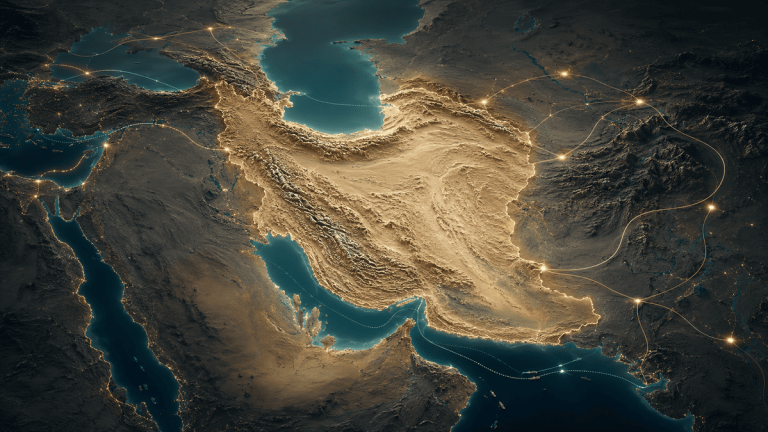
Iran’s investment opportunity cannot be understood only through Tehran, oil, or sanctions. It must be read through its corridors: the Persian Gulf, the Caspian, the Caucasus, Central Asia, Iraq, Afghanistan, Turkey, and the Indian Ocean. Hormuz is the symbolic and practical center of that map.
If the 60-day framework reduces pressure around the Strait, even temporarily, it does not only improve shipping conditions. It changes the way investors think about Iran’s role as a trade platform.
What could be repriced first?
If the memorandum holds and negotiations continue, the first repricing will likely appear in areas most sensitive to sanctions, trade access, shipping confidence, and foreign expectations.
The first category is energy and petrochemicals. Any improvement in export expectations, shipping reliability, or payment channels can change the economics of oil-linked and petrochemical activity.
The second is logistics and ports. Bandar Abbas, Qeshm, Chabahar, and other strategic nodes could attract renewed attention if commercial passage and port access become more predictable.
The third is export-oriented manufacturing. Iran’s industrial base has long operated below its potential because of capital constraints, technology gaps, and limited access to global buyers. A change in external conditions could make selected manufacturing assets more interesting.
The fourth is mining and metals. Iran has deep resource potential, but many opportunities depend on financing, equipment, logistics, processing capacity, and export routes.
The fifth is strategic real estate. Not generic speculation, but land and commercial assets linked to logistics corridors, ports, industrial zones, tourism clusters, and cross-border trade.
The sixth is public-market sentiment. Even before foreign capital enters directly, domestic markets may begin to price the possibility of lower geopolitical pressure, better export conditions, or currency stabilization.
None of these outcomes is guaranteed. But they are the areas investors should watch first.
The investor’s mistake: waiting for certainty
Iran is not a market for passive optimism. It requires caution, local intelligence, verification, and disciplined execution.
But waiting for perfect clarity can also be a mistake.
The investors who benefit most from repricing events are usually not those who enter blindly. They are those who prepare early, understand the risk map, and move only when the structure becomes executable.
The 60-day window should therefore be used for preparation, not speculation.
A serious investor should be asking:
Which sectors would benefit first from reduced external pressure?
Which assets are mispriced because of isolation rather than poor fundamentals?
Which local partners can be verified?
Which risks are legal, which are political, and which are operational?
Which opportunities remain attractive even if the agreement only partially holds?
Which opportunities depend entirely on a full diplomatic breakthrough?
These are the questions that separate strategic investors from headline-driven capital.