The Iran Thesis: Why Iran Deserves Serious Investor Attention Now
Most investors do not ignore Iran because they have studied it carefully. They ignore it because they believe the story is already known.
For years, Iran has been treated less as an economy and more as a risk category: sanctions, political tension, currency instability, compliance difficulty, restricted banking, and regional conflict. None of these concerns should be dismissed. Iran is not an easy market, and any serious investment analysis must begin with the constraints rather than pretend they do not exist.
But a risk narrative is not the same as a market thesis. It can explain why capital stayed away, but it cannot fully explain what has been left behind.
Iran is a large economy with a population close to 90 million, a deep real-asset base, one of the world’s significant energy positions, an educated workforce, industrial capacity, digital consumers, and a geography that connects the Persian Gulf, Central Asia, the Caucasus, Turkey, Iraq, Afghanistan, Pakistan, and wider Eurasian trade routes. It is not a small frontier market waiting to become economically relevant. It is a substantial market that has been constrained, under-covered, and difficult to access.
The investment question is therefore not whether Iran is risky. It is.
The better question is whether the old risk narrative still explains the full picture, especially at a moment when Iran’s political horizon, external negotiations, and regional trade conditions appear to be shifting.
That is where the Iran thesis begins.
From Country Risk to Market Thesis
Country risk is a filter. A market thesis is an argument.
Country risk asks whether a place is difficult. A thesis asks whether the difficulty has caused the market to be misunderstood, under-researched, under-capitalized, or mispriced.
Iran belongs in that second conversation.
The country has remained highly visible in political news, yet surprisingly under-studied as an economy. Headlines have made Iran familiar, but not necessarily understood. Investors know the sanctions story, the nuclear story, the regional-security story, and the currency story. Fewer have mapped the country as a system of assets, industries, cities, ports, corridors, consumers, engineers, manufacturers, traders, and entrepreneurs.
This matters because capital usually enters a market after the thesis has already been built. By the time the story becomes clean, the access becomes easy, and the legal framework becomes comfortable, the early analytical advantage is often gone.
Iran is not a market for blind entry. But it is a market where serious investors should begin building a map before consensus forms.
The Economy Beneath the Headline
Iran’s first investment feature is scale.
A population near 90 million creates a large domestic demand base across food, housing, healthcare, education, transport, financial services, retail, energy, digital tools, and consumer goods. This demand does not disappear because the country is politically complicated. It continues to shape businesses, cities, infrastructure, and household behavior.
That internal scale makes Iran different from many smaller frontier markets. It does not need to invent demand from nothing. The demand exists. The more important question is how efficiently that demand is served, financed, distributed, and connected to capital.
The second feature is the country’s real-asset base. Iran is often reduced to oil and gas, but energy is only one layer of the asset story. Around it sits a broader industrial structure: petrochemicals, metals, mining, cement, agriculture, pharmaceuticals, construction materials, manufacturing, engineering services, ports, logistics, industrial zones, and urban real estate. Some of these sectors are inefficient. Some are overregulated. Some need technology, capital, management, and access. But they are real. They are not theoretical opportunities drawn on a pitch deck.
The third feature is human capital. Iran has a strong tradition in engineering, medicine, mathematics, software, architecture, design, and applied sciences. Iranian talent is visible globally, but the domestic talent base also matters. Businesses inside Iran have learned to operate under inflation, supply-chain constraints, policy uncertainty, and limited international access. That environment creates costs, but it also produces operators who understand how to survive in difficult conditions.
The fourth feature is digital behavior. Iran should not be confused with a digitally primitive market. Consumers are familiar with online services, local platforms have developed in several categories, and digital demand exists even where the financial and regulatory infrastructure remains constrained. In many areas, the consumer is more modern than the systems serving them.
These four layers — scale, assets, people, and digital behavior — form the economic base of the Iran thesis.
Why the Moment Matters
For years, Iran was structurally interesting but politically difficult to act on. Investors could recognize the scale and still decide that the operating environment was too constrained. That was a rational view.
What has changed is not that the risks have disappeared. They have not. The change is that the range of plausible scenarios has widened.
Iran’s recent leadership transition, the emerging U.S.–Iran framework, and renewed discussions around conflict reduction, maritime access, sanctions relief, and economic stabilization have made the country harder to dismiss as a static market. Even if the process remains uncertain, the direction of attention has changed. Investors who previously treated Iran as permanently closed now have to consider a different question: what happens if the country becomes even partially more accessible?
This does not require a fantasy of immediate normalization. Markets often begin to move before conditions become perfect. The first phase is usually not a wave of capital. It is research, mapping, local positioning, partner identification, legal analysis, and revised expectations. Owners begin to reassess assets. Foreign investors begin to watch sectors. Local operators begin to look for alliances. Intermediaries become more important because the market remains difficult, but no longer irrelevant.
That is why timing matters.
Iran may not be fully open, but it may be entering a new window of attention. In a market of this size, even partial changes in access, banking, trade, sanctions exposure, or investor confidence can alter the way assets and sectors are understood.
The Five Engines of the Iran Thesis
The Iran thesis rests on five engines.
The first is domestic scale. Iran’s population gives the market depth. Food, healthcare, education, housing, mobility, retail, payments, telecom, energy, and digital services all sit on a demand base that is too large to ignore. This does not guarantee attractive returns, but it gives investors something real to analyze.
The second is real assets. Energy, minerals, industrial land, factories, ports, logistics nodes, hotels, commercial property, and production facilities create a tangible base for long-cycle investment. In a world where many markets are valued around abstractions, Iran still has physical economic material. The issue is not whether assets exist, but whether they can be verified, financed, upgraded, and connected to demand.
The third is industrial capability. Iran is not only a resource holder. It has manufacturing experience, engineering capacity, petrochemicals, metals, food processing, pharmaceuticals, construction materials, and a network of firms that already serve domestic demand. If access to equipment, finance, and regional markets improves, some of these firms may have room to move from survival to competitiveness.
The fourth is human capital. A market with assets but weak talent is hard to scale. A market with talent but limited capital is inefficient. Iran’s relevance comes from the combination: capable people operating inside a capital-constrained environment. That combination is one reason foreign investors should look beyond raw assets and study operators, founders, managers, engineers, and technical teams.
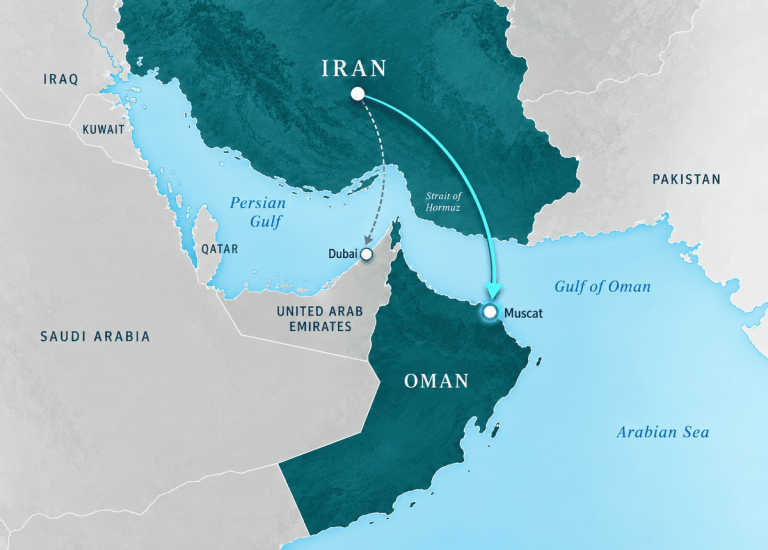
The fifth is geography. Iran’s location is not a decoration on a map. It is part of the economic thesis. The country sits between major energy routes, regional markets, and possible trade corridors. Geography alone does not create value; infrastructure, rules, financing, and stability are required. But if trade conditions improve, Iran’s position can become economically active in a way that has been difficult under prolonged isolation.
Together, these engines create the reason Iran deserves attention. They do not make the country easy. They make it too significant to ignore.
What Must Become True
The Iran thesis becomes investable only if certain conditions improve.
Foreign investors need more than opportunity. They need legal clarity, partner verification, capital movement, contract enforceability, sanctions visibility, data reliability, reporting standards, and credible exit paths. Without these, even strong assets can remain difficult to touch.
This is the central discipline of the market. Iran should not be analyzed only through potential. It must be analyzed through conditions.
What changes would make foreign ownership clearer? Which sanctions restrictions would need to ease for banks, insurers, shipping companies, and compliance teams to move? Which sectors can operate even under partial restrictions? Which assets are too politically exposed? Which local partners can be verified? Which opportunities look attractive until legal, currency, or operational risks are examined?
These are not secondary questions. They are the bridge between thesis and investment.
A large market is not enough. Real assets are not enough. Talent is not enough. Geography is not enough. The opportunity becomes real only where structure can be built around it.
How to Read Iran From Here
Iran should not be read as one simple opportunity. It should be read through three lenses.
The first lens is industry. Some sectors may respond faster than others if access improves. Logistics, energy services, petrochemicals, mining, export-oriented manufacturing, tourism, agriculture, healthcare, and digital infrastructure each have different risk profiles, capital needs, and timing.
The second lens is geography. Tehran, Hormuzgan, Khuzestan, Isfahan, Khorasan, Chabahar, Tabriz, and other regions do not represent the same opportunity. Iran is a country of ports, border economies, industrial cities, religious centers, energy provinces, agricultural zones, and trade corridors. A serious investor cannot read it only from the capital.
The third lens is trust. In Iran, the largest barrier is often not the absence of opportunity but the difficulty of verification. Who owns the asset? Who controls the company? Is the license valid? Can the partner be trusted? Can capital enter and exit? Can contracts be enforced? Can information be checked independently?
These three lenses define the work ahead. The industry lens shows where value may be. The geography lens shows where it is located. The trust lens shows whether it can actually be reached.
The Iran Thesis
Iran is not an easy market, and it should not be sold as one. The country carries serious political, legal, financial, currency, compliance, and execution risks. Many opportunities that look attractive from a distance will fail under proper due diligence.
But difficulty is not the same as irrelevance.
Iran is a large, under-covered economy whose global image has been dominated by risk while its underlying market contains scale, assets, industrial capacity, human capital, consumer demand, and strategic geography. For years, these features were important but difficult to activate. The recent shift in Iran’s political and diplomatic horizon does not remove the barriers, but it does make the market more important to study now.
The thesis is not that everything will open, or that every asset will rise, or that investors should rush in before the risks are understood. The thesis is that Iran may be moving from a market that investors dismissed by default to a market they need to map with discipline.
That difference matters.
If the old constraints remain, many discounts will remain justified. If even some constraints loosen, the market may begin to separate real assets from weak assets, capable operators from protected insiders, strategic regions from ordinary locations, and investable opportunities from noise.
At Hormuz.Group, this is the starting point: Iran should be studied before it is simplified, mapped before it is judged, and understood before it is dismissed.
The question is no longer only whether Iran is risky. It is whether serious investors can afford to ignore a market of this scale at a moment when its old assumptions may be changing.