Iran’s Strategic Islands: What Each One Does and Why It Matters
Iran’s islands in the Persian Gulf are often discussed individually.
Kish is associated with tourism. Qeshm with trade and free-zone activity. Kharg with oil exports. Hormuz with the strait that carries its name. Abu Musa and the Tunbs usually appear in geopolitical discussions.
Seen together, however, these islands form a wider maritime system.
They connect Iran’s mainland economy with offshore energy infrastructure, commercial zones, shipping routes and the Strait of Hormuz. Their importance also varies considerably. Some are major economic assets. Others matter primarily because of where they sit.
That distinction is essential to understanding Iran’s geography from the sea.
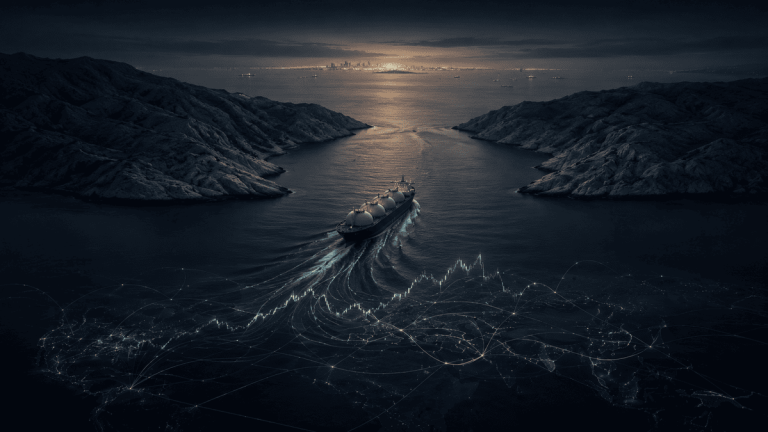
The Strait of Hormuz alone carried an estimated 20.9 million barrels per day of petroleum liquids in the first half of 2025, roughly one-fifth of global petroleum liquids consumption. More than 20% of global LNG trade also passed through the strait during the same period.
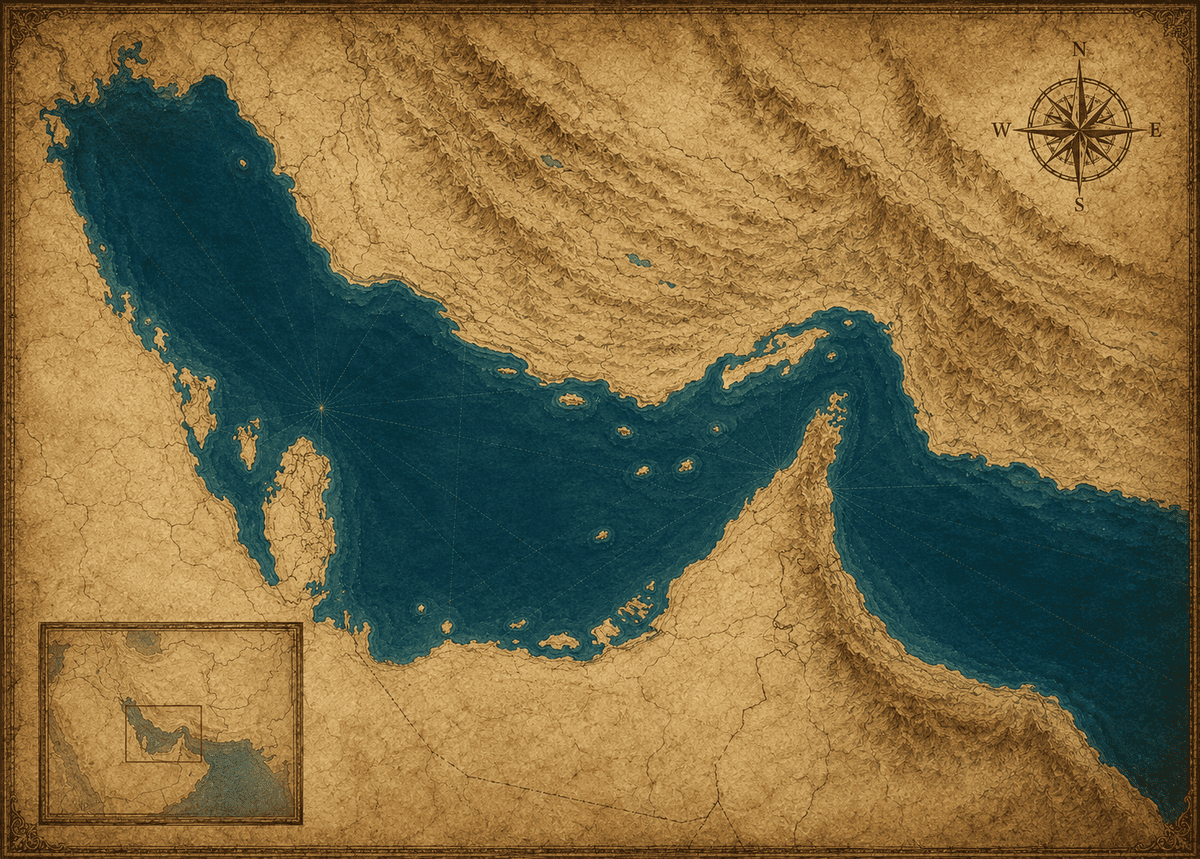
Iran’s islands sit around and beyond this corridor, but each plays a different role.
Qeshm: Iran’s most versatile Gulf island
Qeshm is the largest island in the Persian Gulf and lies immediately west of the Strait of Hormuz, alongside Iran’s southern coast and close to Bandar Abbas. UNESCO describes it as the largest Iranian island and notes its position between the Persian Gulf and the Sea of Oman.
Its strategic value comes from the combination of geography and economic activity.
Qeshm is a free trade and industrial zone with maritime services, ports, tourism, industry and commercial activity. Its proximity to Bandar Abbas gives it access to one of Iran’s main logistics and population centres on the southern coast, while its location near the strait places it directly inside the country’s Gulf-facing economic system.
Energy infrastructure adds another layer. An oil terminal on Qeshm began operations in 2020 with storage capacity for crude oil, condensate and petroleum products.
Unlike many other Iranian islands, Qeshm therefore cannot be reduced to one function.
It is simultaneously a commercial zone, industrial location, tourism destination, logistics node and strategically positioned island.
For businesses looking at Iran’s southern economy, Qeshm is one of the few islands where several of these functions overlap.
Hormuz: small economy, exceptional location
Hormuz Island is much smaller and economically less developed than Qeshm, but its location gives it a significance far beyond its size.
The island sits near the Iranian side of the entrance to the Strait of Hormuz, close to Bandar Abbas, Qeshm and Larak.
Historically, this position helped make the wider Hormuz area an important centre of maritime trade between Persia, Arabia, India and the wider Indian Ocean.
Today, Hormuz is better known for tourism, geological landscapes, local fishing and its historical heritage than for major industrial or commercial infrastructure.
Its strategic importance is therefore primarily geographic.
Hormuz is a good example of why the value of an island cannot always be measured through population, GDP or infrastructure. A relatively small piece of land can matter because of the maritime space around it.
Larak: a geographic outpost near the strait
South-east of Qeshm lies Larak.
The island has a limited civilian economy compared with Qeshm or Kish, but occupies a particularly sensitive position close to the approaches to the Strait of Hormuz.
Its economic role is modest. Fishing and local activity matter to residents, but Larak is not a major national commercial centre.
Its wider relevance comes from maritime geography and Iran’s presence along the northern side of one of the world’s most important shipping corridors.
This makes Larak strategically significant even though it generates relatively little direct economic activity.
The contrast with Kish is useful: one island matters mainly because of what happens on it; the other matters largely because of where it is.
Kharg: the island at the centre of Iran’s oil exports
If Qeshm is Iran’s most versatile Gulf island, Kharg is arguably its most economically consequential.
Located in the northern Persian Gulf off the coast of Bushehr, Kharg is the centre of Iran’s crude oil export infrastructure.
This gives Kharg a very different strategic role from islands near the Strait of Hormuz.
Its importance is not primarily that it sits beside a shipping chokepoint. Its importance comes from the infrastructure concentrated on the island.
Oil produced hundreds of kilometres away can ultimately enter international markets through Kharg.
As a result, developments affecting the island can have implications far beyond its small geographic footprint.
Lavan: an offshore energy hub
Lavan is another important part of Iran’s offshore oil system.
Located farther south in the Persian Gulf, it supports production and exports associated with offshore fields and the Lavan crude stream.
Its scale is much smaller than Kharg, but that does not make it irrelevant.
Lavan demonstrates how Iran’s petroleum system is geographically distributed. Offshore fields, pipelines, storage facilities and export terminals form a network rather than relying entirely on one location.
The island also supports local communities and limited non-energy economic activity, but energy remains its defining national role.
Sirri: connecting offshore fields to export markets
Sirri performs a similar but distinct function.
Situated in the central Persian Gulf, it serves as an operational base and loading point for oil produced from offshore fields in the surrounding area.
Sirri is therefore less visible to the general public than Kish or Qeshm but highly relevant to anyone analysing Iran’s upstream oil industry.
Its importance comes from connecting offshore production with storage and maritime exports.
That makes Sirri an industrial island rather than a diversified island economy.
Kish: Iran’s service and tourism island
Kish represents another model entirely.
Its strategic value is economic rather than primarily energy-related or geographic.
The island operates as a free zone and has developed a concentrated economy around tourism, hotels, retail, real estate, events, aviation and business services. Air access is particularly important because much of Kish’s visitor economy depends on passengers arriving from major Iranian cities rather than maritime freight.
Kish has also long functioned as one of Iran’s experiments in creating a more internationally oriented commercial environment.
That ambition has had mixed results. Sanctions, financial restrictions and regional conditions continue to constrain international investment.
Yet within Iran, Kish remains unusual: a relatively compact market where tourism infrastructure, retail, aviation, property development and free-zone regulation operate together.
Its importance is therefore not comparable to Kharg.
Kharg helps Iran export oil. Kish helps Iran develop services, tourism, commerce and investment activity.
Both are strategic, but for completely different reasons.
Greater Tunb: strategic value greater than economic value
The island has little economic significance compared with Qeshm, Kish or the major oil-export islands.
Its importance instead derives from geography and sovereignty.
Greater Tunb extends Iran’s physical presence farther into the Persian Gulf and lies close to maritime routes connecting the Gulf with the Strait of Hormuz.
This is a recurring pattern across Iran’s island network: relatively small islands may hold limited commercial value but considerable strategic value.
Lesser Tunb: almost entirely strategic
Lesser Tunb makes that distinction even clearer.
The island is small, lacks a significant civilian economy and has little independent commercial importance.
Yet its location near Greater Tunb and the maritime approaches to the Strait of Hormuz gives it geopolitical significance disproportionate to its size.
If Kharg represents infrastructure-based strategic value, Lesser Tunb represents almost the opposite: strategic value created primarily by geography.
Abu Musa
Farther south lies Abu Musa.
Unlike the smaller Lesser Tunb, Abu Musa also has a civilian population and local infrastructure.
Its wider significance comes from its position in the southern Persian Gulf and its role in Iran’s physical presence across the waters approaching the Strait of Hormuz.
Because of the territorial dispute, however, Abu Musa cannot be viewed only as another Iranian island economy.
Its political and strategic value is significantly greater than its commercial importance.
For economic analysis, this means the island is primarily relevant as a geopolitical factor rather than as a conventional investment or trade destination.
Different islands, different forms of power
Calling all of these islands “strategic” can be misleading unless the word is defined carefully.
Their importance comes from several different sources.
Kharg, Lavan and Sirri matter because they are embedded in Iran’s energy infrastructure.
Qeshm combines geography with trade, industry, logistics, tourism and free-zone activity.
Kish is primarily a service, tourism and commercial hub.
Hormuz and Larak derive much of their importance from their position around the Strait of Hormuz.
Abu Musa and the Tunbs carry disproportionate geopolitical weight because of their location and the continuing sovereignty dispute with the UAE.
They are therefore not substitutes for one another.
Removing Kharg from the picture would affect the architecture of Iran’s oil exports. Removing Kish would affect a very different part of the economy. Qeshm is unusual precisely because several strategic functions coexist on the same island.
Why the islands matter to Iran’s economy
The broader lesson is that Iran’s southern coastline does not end at the mainland.
Its economic geography extends offshore.
Oil terminals on islands connect inland fields to global markets. Free zones create alternative commercial environments. Tourism islands support service industries. Smaller islands extend Iran’s presence across the Persian Gulf, while the Strait of Hormuz places the entire system beside one of the most important maritime corridors in the world.
This also explains why investment potential differs sharply between islands.
Qeshm and Kish can be evaluated as operating markets with opportunities in tourism, logistics, services, real estate, trade and selected industries.
Kharg, Lavan and Sirri are much more specialised and closely tied to Iran’s energy sector.
Hormuz has potential primarily in tourism and local economic development.
Abu Musa and the Tunbs are better understood through geopolitics and maritime geography than through conventional investment analysis.
Understanding those differences matters more than simply knowing where the islands are.
Taken together, Iran’s islands reveal something fundamental about the country’s position in the Persian Gulf: its maritime power is not concentrated in a single port, terminal or island, but distributed across a network in which geography, energy and commerce perform different roles.