Iran’s Human Capital: The Underused Advantage
Iran’s workforce is often reduced to three familiar observations: the country has a large population, university education is widespread, and wages are low when converted into foreign currency. All three are relevant, but they do not explain why human capital may actually matter to an investor.
The more distinctive feature is the combination of technical education and practical experience that has developed around a sizeable domestic economy. Iran has spent decades training engineers, doctors, pharmacists, scientists and other professionals while simultaneously operating large industrial, energy, healthcare and, more recently, digital sectors. This has created a workforce whose capabilities are broader than the country’s income level or degree of integration with the global economy might suggest.
At the same time, the economy does not use all of that capacity particularly efficiently. Labor-force participation remains low, many graduates struggle to find work that matches their training, women are heavily represented in higher education but far less visible in formal employment, and some of the country’s strongest professionals leave in search of better opportunities abroad.
For a foreign investor, these are not separate stories. Together they point to an economy where a considerable stock of human capital already exists, but the conditions needed to make full use of it have often been missing.
That is a more useful way to think about Iran’s workforce than simply calling it cheap.
What the data actually tells us
The headline numbers are most useful when they are read together. On one side is a large technical education system and a substantial industrial workforce; on the other is a labor market that leaves a significant share of available talent outside full economic use.
| Human-capital signal | Latest available figure | Why it matters |
|---|---|---|
| Tertiary enrollment | 58.7% | Higher education reaches a large share of the relevant population |
| Science & engineering graduates | 35% of graduates | Technical disciplines make up an unusually large part of the graduate pipeline |
| Global rank in science & engineering graduates | 8th | Iran stands out internationally on the technical orientation of its education system |
| Employment in industry | 31% | A substantial part of the workforce develops inside real industrial operations |
| Labor-force participation | 40.7% | A large share of working-age capacity remains outside active employment |
| Female labor-force participation | 14% | Educational capacity among women is far from fully reflected in employment |
| WIPO innovation input / output rank | 109th / 46th | Innovation outcomes are considerably stronger than the surrounding input environment |
Sources: WIPO Global Innovation Index 2025, World Bank/ILO labor data, and Iran’s Spring 2026 Labour Force Survey. Underlying years vary by indicator because international education datasets are published with a lag.
The table does not imply that every graduate is highly skilled or that unused labor can be converted immediately into productive employment. It does, however, show an unusual combination. Iran produces a comparatively large share of science and engineering graduates, employs a substantial industrial workforce and generates innovation outcomes well above what its broader operating environment might lead one to expect, while participation in the labor market remains limited.
The interesting part is the space between those two sides.
Technical education sits on top of a real industrial economy
Iran’s engineering base is more valuable because it did not develop in isolation from industry.
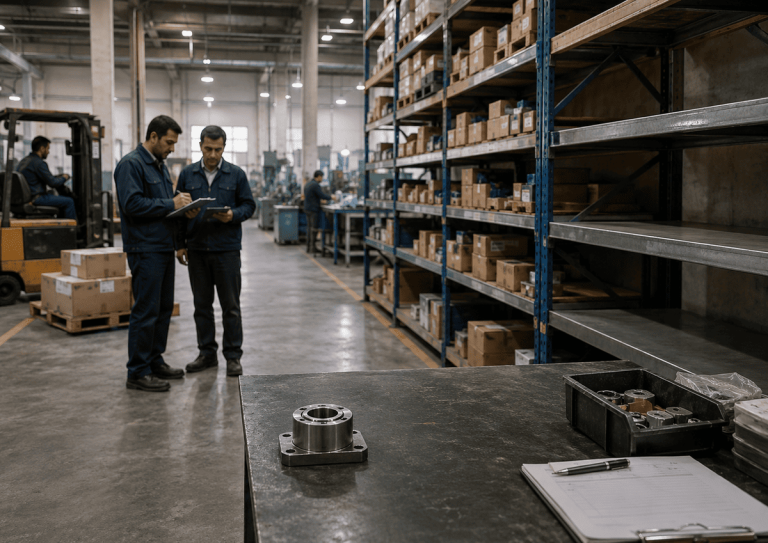
The country operates large oil and gas fields, refineries, petrochemical complexes, mines, steel mills, cement plants, power networks, automotive factories and major infrastructure systems. Around them sits another layer of engineering contractors, equipment manufacturers, laboratories, maintenance businesses, component suppliers and industrial service companies.
That environment gives at least part of the technical workforce experience that cannot be created through university education alone. Mechanical engineers can spend their careers around production lines, rotating equipment and maintenance systems; chemical engineers can move into refining, petrochemicals or process industries; mining and metallurgical engineers have domestic industries in which their training is directly applicable.
The quality of that experience is not uniform, and familiarity with the latest international equipment or management systems cannot be assumed. Still, the starting point is important. An investor entering an established industrial cluster is often recruiting from a workforce that already understands production environments, technical hierarchies and the everyday realities of operating physical assets.
There is a large difference between teaching an engineer a new production system and teaching someone what an industrial operation is.
This is one reason Iran can be more interesting for technically demanding investment than a comparison of wage levels alone would suggest.
Operating under constraint has shaped the workforce as well
Iranian industry has also developed under conditions that have forced companies to solve problems differently.
Restricted access to foreign suppliers, spare parts, software, finance and original-equipment support has often made industrial operations more difficult and less efficient. Equipment can remain in service for longer than originally intended, imported components may have to be replaced locally, and engineers sometimes need to redesign around what can actually be sourced.
These conditions should not be presented as an advantage in themselves. They raise costs, slow modernization and can leave companies behind international best practice.
But they have also produced a body of experience in maintenance, adaptation, localization and problem-solving under imperfect conditions. That experience is particularly relevant in sectors such as industrial services, manufacturing, energy and equipment maintenance, where the ability to diagnose and improvise can be as important as familiarity with ideal operating procedures.
For a foreign investor, the opportunity would not be to preserve the constraints that produced those skills, but to remove some of them. Better equipment, more reliable supply chains, modern software, stronger quality systems and access to international technical support can raise the productivity of people who already understand the underlying industry.
In many cases, the most valuable contribution of foreign investment may be the environment it creates around existing capability.
The talent base has expanded beyond heavy industry
Iran’s technical workforce is no longer defined only by engineering plants and traditional industry.
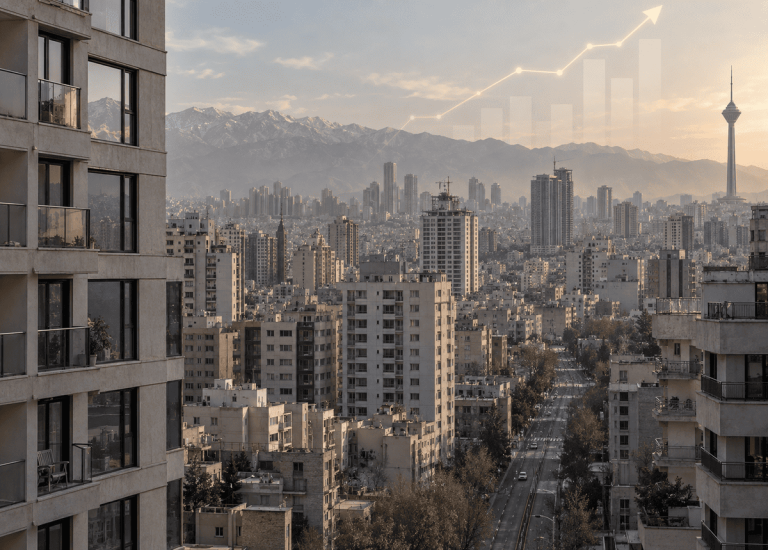
Over the past two decades, a meaningful domestic technology sector has developed around e-commerce, fintech, payments, online marketplaces, mobility, cloud infrastructure, enterprise software and consumer applications. These businesses have created careers for software engineers, product managers, UX designers, data professionals, digital marketers and technical operations teams.
This matters because the Iranian technology ecosystem has largely developed around its own domestic market rather than as a pure outsourcing industry. Product teams have had to build services for millions of users, work around payment and infrastructure limitations, and adapt products to local consumer behavior.
Someone who has worked on a large marketplace, payments platform or mobility application brings a different kind of experience from a graduate whose exposure is primarily academic.
Tehran contains the deepest pool of this talent, although senior technology professionals are also among the people most capable of working remotely for foreign companies or leaving the country. The opportunity is therefore real, but so is competition for the strongest candidates.
Healthcare adds another important layer. Iran has a large medical education system and established capabilities in medicine, pharmaceuticals, diagnostics, biotechnology and research. Domestic pharmaceutical manufacturing and a large healthcare system have given many professionals a path from education into practical work rather than leaving scientific training disconnected from the economy.
For businesses in pharmaceuticals, diagnostics, medical technology or research-intensive industries, that means local talent can potentially support technical and operational functions rather than simply sales and distribution.
Much of the potential is hidden outside unemployment statistics
The amount of unused human capital in Iran is easy to underestimate because unemployment captures only part of it.
In Spring 2026, labor-force participation stood at 40.7%. Female participation is especially low, with the latest ILO estimate at roughly 14%, despite women being heavily represented in universities and accounting for a significant share of STEM graduates.
Someone who is not working and not actively seeking work is not counted as unemployed. As a result, conventional unemployment figures miss a large group of people whose education and skills may still have economic value.
Women are the clearest example, but not the only one. There are also graduates working outside the fields they studied, professionals whose roles make limited use of their qualifications, and younger workers who have not yet found a clear path into formal employment.
None of this should be interpreted as an immediately available pool of frictionless labor. Location, transport, family responsibilities, workplace practices and the quality of available jobs all influence whether people actually enter or remain in employment.
What it does suggest is that companies should not assess Iranian talent only by looking at the people already competing in the formal labor market.
An employer offering a credible professional environment, predictable working conditions, better management and real career progression can sometimes expand the pool from which it recruits rather than merely outbid existing employers for the same workers.
This is particularly relevant in professional, technical and knowledge-intensive roles where job quality itself affects labor supply.
Cost matters most when it is considered alongside capability
Iranian labor can be inexpensive in foreign-currency terms, especially after periods of exchange-rate depreciation, but that alone is not a particularly strong reason to invest.
Many countries offer low wages, and some of them offer easier banking, lower political risk and more straightforward international connectivity.
Iran becomes more interesting when labor cost is considered alongside the type of capability available.
An economy that combines relatively low employment costs with a large engineering pipeline, decades of industrial experience and an established technology sector is different from one whose advantage comes mainly from inexpensive manual labor.
That distinction changes the comparison.
For a simple assembly operation, the relevant question may be the cost per worker. For an advanced manufacturing business, engineering company, software operation or pharmaceutical project, the better question is how much technical capability can be assembled at a given cost and how quickly that workforce can reach the required standard.
In many professional roles, the compensation difference between Iran and markets such as Western Europe or the Gulf can be considerably larger than the difference in underlying technical ability.
That does not mean every Iranian engineer, developer or specialist is internationally interchangeable. Experience, language ability, management exposure and familiarity with global standards vary widely. Senior talent can be scarce and may command salaries far above local averages.
The advantage lies in the shape of the talent pool: a broad base of technically educated people at a cost structure that can make substantial training and capability-building economically viable.
Geography determines what kind of talent is actually available
Iran should not be treated as a single labor market.
Tehran dominates finance, technology, professional services, corporate management, sales and many headquarters functions. It offers the widest choice of senior and internationally oriented professionals, but it is also the most competitive market for them.
Industrial talent follows a different map.
Isfahan has deep experience in steel, manufacturing and engineering. Yazd and Kerman are closely linked to mining, metals and industrial processing. Khuzestan and Bushehr concentrate much of the country’s oil, gas, refining and petrochemical expertise. East Azerbaijan has a long manufacturing tradition, while Karaj sits inside a wider Tehran–Alborz corridor that combines industrial and technical activity. Mashhad and Shiraz have important concentrations in healthcare, education and services.
For an investor, the labor implication is straightforward: location decisions shape the talent pool long before recruitment begins.
An industrial site close to an established cluster can provide access not only to workers, but also to contractors, suppliers, maintenance expertise and informal professional networks that have accumulated over many years. A cheaper site with no relevant labor ecosystem may become more expensive once recruitment, relocation and retention are taken into account.
Some businesses may therefore benefit from a split structure, with corporate and commercial functions in Tehran and technical operations located closer to the relevant industrial base.
Workforce mapping should be part of site selection, not something that begins after the site has already been chosen.
Where foreign investment can add the most
The strongest human-capital opportunities are likely to be found in businesses where an investor brings something the local ecosystem lacks while relying on capabilities that already exist inside the country.
In advanced manufacturing, that may mean combining modern production equipment and quality systems with local engineers and technicians.
In mining and metals, capital, machinery and international market access can be added to an existing resource base and a workforce already familiar with extraction and processing.
In energy and petrochemicals, new technology and project-management practices can build on decades of operational experience.
In pharmaceuticals and healthcare, investment can connect scientific and medical talent with better equipment, research partnerships or international distribution.
Technology businesses have a somewhat different opportunity. Here the missing inputs may be capital, international networks and access to larger markets rather than basic technical ability.
Across these sectors, the important feature is that the investor does not need to import every part of the operating model.
Some of the harder-to-create capabilities already exist locally.
This is also where Iran’s unusual gap between innovation inputs and outputs becomes relevant. WIPO ranked the country 109th for innovation inputs but 46th for innovation outputs in its 2025 index. The measure is not a direct proxy for workforce productivity, but the disparity is still instructive: Iran appears capable of producing considerably more technological and knowledge output than the quality of its surrounding environment would normally suggest.
The implication is not that productivity will improve automatically once capital arrives. Better management, training and organization still matter enormously. But where people are already technically capable, improving the tools and systems around them can produce results faster than trying to build human capital from the beginning.
The harder part is senior talent and retention
The depth of the graduate pipeline should not be confused with an unlimited supply of experienced leadership.
Iran has many technically trainable graduates and meaningful pools of experienced engineers, doctors, developers and other specialists. The narrower segment is made up of people who combine deep technical or sector knowledge with senior management experience, strong English, exposure to international business practices and the ability to work across different organizational cultures.
These people are scarcer, and they are also among the most mobile.
For that reason, a foreign company entering Iran would often be better served by identifying a small number of critical senior positions first and building the wider organization around them. A capable plant manager, technical director, country lead or finance head can improve recruitment and assessment across the rest of the organization.
Retention deserves the same attention.
Strong Iranian professionals may be choosing between domestic employers, remote international work and migration. Salary matters, but it is not the only variable. Access to modern tools, competent management, professional development, meaningful responsibility and exposure to international standards can all influence whether someone sees a long-term future inside a company.
A well-run foreign-linked business can therefore have an advantage in attracting people who are frustrated less by the work itself than by the environment in which they currently have to do it.
That advantage disappears quickly if the foreign company brings bureaucracy without better management.
A workforce whose value is larger than its current use
The case for Iranian human capital is ultimately less about abundance than about the gap between capability and utilization.
The country already has many of the ingredients that take years to create: universities producing technical graduates, established industrial sectors, experienced engineering communities, a sizeable healthcare system and a domestic technology ecosystem that has produced real operational experience.
What it has lacked more consistently is the surrounding environment that allows those capabilities to reach their economic value: investment, modern equipment, access to global suppliers and markets, stable management systems and deeper integration with international business.
That is why Iran’s workforce is more interesting as a productivity opportunity than as a low-cost labor story.
An investor that enters only because salaries appear cheap may find the market more complicated than expected. An investor that understands where technical depth already exists, where training can close the remaining gaps and where better systems can raise the productivity of local talent is looking at a different opportunity altogether.
In that setting, human capital is not simply one of the costs of operating in Iran.
It can be one of the assets that makes the investment work.