AI in Iran: Current Landscape, Industrial Opportunities and Future
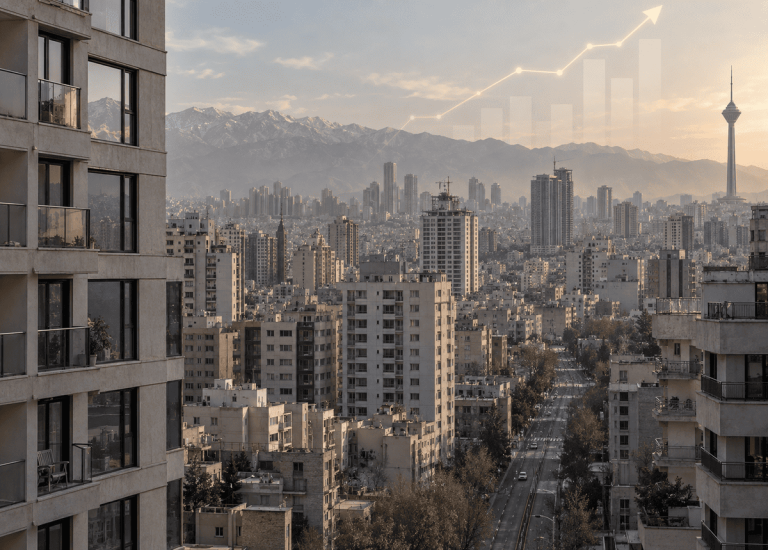
Artificial intelligence is no longer a distant technology waiting to arrive in Iran. It is already present in the daily routines of students, programmers, designers, doctors, marketers, entrepreneurs and office workers. It is helping people write, translate, search, analyse, code, study and make decisions, often without appearing in official statistics or corporate technology budgets.
What has not yet happened is the second stage of adoption: the systematic integration of AI into Iranian organisations, industries and public services.
This distinction matters. Iran is not an AI-free market, nor is it an AI-led economy. It is better understood as a market with relatively rapid informal adoption, considerable technical talent and substantial unmet demand, but limited access to computing infrastructure, fragmented data, institutional uncertainty and weak pathways for scaling AI from individual use into reliable industrial systems.
That gap between widespread experimentation and structured deployment is where much of the opportunity lies.
AI Has Already Entered Iranian Society
Iran had approximately 73.2 million internet users at the beginning of 2025, equivalent to an internet penetration rate of 79.6 percent. This large connected population provides the basic distribution layer through which generative AI can spread, even when access to specific international services is difficult or inconsistent.
There is no sufficiently reliable nationwide survey measuring how many Iranians actively use AI tools. Any precise claim about national adoption should therefore be treated cautiously. But several observable patterns indicate that AI has already moved beyond Iran’s technology community.
Students use it to explain difficult subjects, summarise material and prepare assignments. Programmers use coding assistants, debugging tools and AI-generated documentation. Small businesses produce advertising copy and product imagery without maintaining full creative teams. Translators, researchers, lawyers, financial analysts and content producers increasingly use language models as an informal first layer of work.
Open and low-cost models have been particularly important. Microsoft’s global AI diffusion research found that DeepSeek gained especially strong traction in countries including Iran, where free access and open-source availability reduced some of the financial and technical barriers associated with other advanced systems.
This form of adoption is significant, but it remains largely invisible. It usually takes place through personal accounts rather than enterprise systems. Employees may use AI even when their organisations have no formal policy, secure infrastructure, approved workflow or method for checking outputs.
Iran therefore faces a paradox: AI may be more common inside Iranian workplaces than official corporate adoption figures suggest, yet less deeply integrated into the actual operating systems of those organisations.
Where Iran Stands Today
Iran’s position in AI cannot be captured by a single global ranking. Its strengths and weaknesses are distributed unevenly.
In the validated 2025 Government AI Readiness Index, Iran ranked 76th among 195 governments. Its strongest score was in policy capacity, at 84.5, while it performed more modestly in AI infrastructure, governance, public-sector adoption, development and diffusion, and resilience. The profile suggests that formal ambition and policy attention are ahead of practical implementation capacity.
A similar pattern appears in the Global Innovation Index. WIPO ranked Iran 70th among 139 economies in 2025 and identified it as one of the fastest-rising innovation systems since 2013. Iran continued to perform better in knowledge and technology outputs than its overall institutional and investment environment would normally predict.
Iran also has a substantial academic base in computer science, engineering, mathematics, medical research and related AI fields. But research volume does not automatically translate into commercial products, defensible intellectual property, globally connected startups or large-scale industrial deployment.
The country has adopted a National Artificial Intelligence Document containing a broad policy framework, major objectives and assigned responsibilities. It has also created, restructured and reconsidered different national bodies intended to coordinate AI policy. These changes demonstrate that AI has become a strategic priority, but they also reveal uncertainty over who should lead execution and how resources should be allocated.
A national AI platform was presented in 2025 with plans for phased access to researchers, companies and eventually the public. Its strategic logic was clear: Iran wants a domestic layer of AI capability that is less exposed to external service restrictions. The more difficult question is whether such platforms can secure enough compute, data quality, developer participation and operational continuity to become useful infrastructure rather than symbolic national projects.
Iran’s current position can therefore be summarised as follows:
The country possesses users, engineers, research capability and clear demand. What it lacks is a stable bridge connecting those assets to scalable AI deployment.
The Persian-Language Opportunity
Language is one of the most important and underdeveloped parts of Iran’s AI economy.
Major global language models can communicate in Persian, but Persian fluency is not the same as Iranian competence. A model may generate grammatically acceptable text while misunderstanding Iranian law, commercial terminology, institutional structures, cultural references, historical context or forms of indirect communication.
Recent evaluation projects have started to measure this gap more rigorously. The MELAC project introduced 19 datasets covering subjects such as Iranian law, Persian grammar, idioms and university entrance examinations, and evaluated 41 major language models. Another benchmark, FarsEval-PKBETS, tested models across medicine, law, religion, language, social knowledge, ethics and cultural context; the models assessed achieved average accuracy below 50 percent.
This weakness creates a commercial opening.
Iran does not necessarily need to train a frontier-scale general model from the beginning. A more practical market can be built around Persian retrieval systems, specialised datasets, evaluation tools, domain-specific fine-tuning and secure enterprise applications connected to verified local knowledge.
The valuable product is not another general chatbot with a Persian interface. It is a system that can accurately work with Iranian invoices, regulations, medical records, industrial manuals, legal documents, company files, customer conversations or supply-chain data.
Persian AI also has an addressable market beyond Iran, including Persian-speaking communities in Afghanistan, Central Asia and the global diaspora. More importantly, it can become an export capability for organisations that learn how to build high-quality AI systems for languages and institutional environments underserved by global platforms.
How AI Is Likely to Move Through Iranian Industries
AI will not enter every part of the Iranian economy at the same speed. Adoption will depend on data availability, management quality, regulatory sensitivity, margins, infrastructure and the cost of existing inefficiencies.
Technology and Business Services
Software companies, digital agencies, consulting firms and professional-service businesses are the most immediate adopters because much of their work already takes place in digital form.
Coding, testing, document processing, research, sales preparation, customer support and reporting can be partially automated without waiting for new physical infrastructure. Small teams can deliver output that previously required larger administrative, technical or creative departments.
The greatest near-term opportunity is not simply reducing headcount. It is allowing Iranian firms to produce more sophisticated services despite limited capital and difficulty accessing international expertise.
However, generic AI wrappers will be easy to copy. Sustainable companies will need proprietary workflows, customer access, domain data, integrations or measurable operational outcomes.
Financial Services and Insurance
Iran’s banks, payment companies, brokerages, insurers and fintech platforms generate large volumes of structured and semi-structured data. That makes finance one of the strongest potential markets for applied AI.
Relevant use cases include fraud detection, transaction monitoring, customer-service automation, claims assessment, document verification, credit analysis, portfolio research and compliance review.
Iran’s distinctive financial environment increases the value of locally adapted systems. Multiple exchange rates, inflation, incomplete credit information, informal transactions and changing regulatory requirements make imported models less useful unless they are connected to current local data and clear approval processes.
The constraint is not the absence of data. It is that data is often fragmented across legacy systems, inconsistently labelled and difficult to share across departments. The most valuable AI providers may therefore begin as data-integration and workflow companies rather than pure model developers.
Healthcare and Pharmaceuticals
Iran has a large healthcare system, a substantial medical profession and a wide network of universities, hospitals, laboratories and primary-care facilities. Potential AI applications include diagnostic support, medical imaging, triage, population-health analysis, drug research, hospital scheduling and clinical documentation.
Iranian research on AI in primary healthcare identifies a promising future but also points to legal uncertainty, limited interoperability, data governance problems, uneven digital infrastructure, skills gaps and the need to maintain public and professional trust.
The strongest early applications are likely to be assistive rather than autonomous. AI can prepare a report, detect a possible anomaly, prioritise cases or summarise records, while a licensed professional retains responsibility for the decision.
This human-supervised model is more realistic, safer and easier to deploy than attempting to replace physicians. It is also commercially attractive because even modest reductions in diagnostic delay, administrative workload or unnecessary testing can produce significant value across a large health network.
Persian medical AI is becoming a distinct research field. The development of specialised Persian biomedical models and evaluation datasets shows that local capability can be built around domain knowledge rather than competing directly with the largest global general-purpose models.
Manufacturing, Mining and Metals
Iran’s industrial economy includes steel, copper, aluminium, cement, petrochemicals, automotive production, pharmaceuticals and food processing. Much of this capacity operates with ageing equipment, uneven automation and costly interruptions.
These characteristics create a practical market for predictive maintenance, computer-vision inspection, energy optimisation, production planning and anomaly detection.
An AI system that reduces furnace downtime, identifies surface defects, forecasts equipment failure or improves inventory planning may create more measurable value than a consumer chatbot reaching hundreds of thousands of users.
Industrial AI is harder to implement because it requires sensor data, integration with operational technology and cooperation from plant management. But that difficulty also creates stronger barriers to entry. A company that develops reliable industrial datasets and learns how to deploy models inside Iranian factories may be difficult to replace.
The winning model will often be hybrid: local software, imported or domestically assembled sensors, human engineering expertise and AI used as a decision-support layer.
Energy, Electricity and Utilities
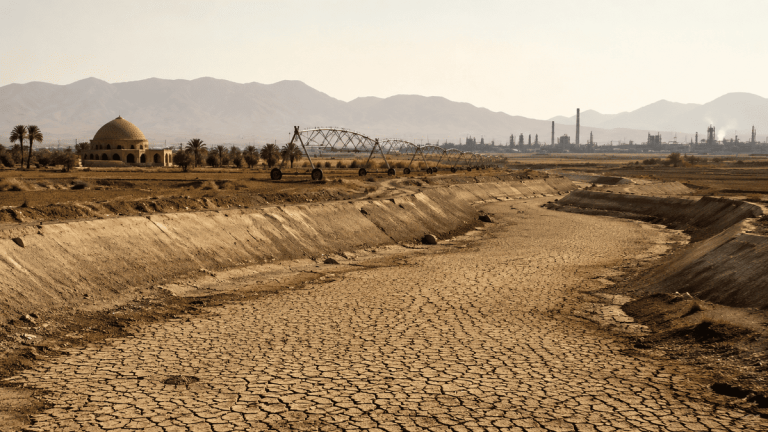
Iran’s energy advantage coexists with severe inefficiency, grid stress, seasonal shortages and ageing infrastructure.
AI can support demand forecasting, grid balancing, leak detection, predictive maintenance, refinery optimisation and energy management in large industrial facilities. It can also help prioritise inspections and allocate maintenance budgets where equipment failure would be most expensive.
The commercial case is particularly strong because AI does not need to solve Iran’s entire energy problem to be valuable. Even narrow improvements in forecasting, equipment reliability or consumption management can reduce costs.
At the same time, AI infrastructure itself requires reliable electricity. Data centres and high-performance computing clusters cannot become strategic assets if power supply is unstable. Energy and AI policy are therefore not separate agendas. Each depends on the other.
Agriculture and Water
Agriculture is one of the areas where Iran’s need is highest but implementation may be slowest.
AI can assist with irrigation scheduling, crop monitoring, pest detection, yield forecasting, greenhouse management, livestock health and quality grading. Combined with satellite imagery, drones, weather information and field sensors, it can help farmers use water and inputs more precisely.
Research on smart farming in Iran suggests that adoption depends not only on technology but also on perceived usefulness, user confidence, training and the ability to demonstrate results to farmers. Studies of agricultural drones similarly point to financial, regulatory, technical and organisational barriers.
This means the opportunity is unlikely to be captured by selling an abstract AI platform. It will be captured by companies that solve a specific problem, such as detecting disease in pistachio orchards, optimising greenhouse irrigation or grading export fruit, and that can distribute the product through cooperatives, agribusinesses, insurers or large buyers.
Retail, E-commerce and Consumer Markets
AI is already affecting digital advertising, product recommendations, customer support, pricing, demand forecasting and content production.
Iranian e-commerce and consumer platforms have large behavioural datasets, making them natural candidates for recommendation systems and conversational commerce. Smaller retailers can use AI to produce product descriptions, manage messages and analyse sales without employing specialist teams.
But consumer-facing AI products have weak defensibility unless they own a distribution channel. A general chatbot can be replaced quickly. An AI system embedded in a marketplace, payment network, retailer, delivery platform or loyalty programme is more durable because it has access to customers and transaction data.
Logistics and Trade
Iran’s fragmented logistics system creates opportunities in route planning, fleet management, customs documentation, warehouse operations, cargo matching and supply-chain risk monitoring.
The most useful systems may combine AI with live operational data: vehicle location, port activity, inventory levels, delivery records, weather conditions and trade documentation.
For companies engaged in imports, exports or regional transit, AI can also reduce the time required to screen counterparties, classify goods, prepare documentation and track regulatory changes. The system must remain auditable because an incorrect automated decision in trade or compliance can create serious financial and legal consequences.
Education and Workforce Development
Education may become the most socially visible AI market in Iran.
Students can receive personalised explanations, language practice and exam preparation at low marginal cost. Teachers can prepare materials, analyse student performance and provide more targeted feedback. Universities can use AI in research, administration and technical training.
But education also exposes the limits of unstructured adoption. When AI is used only to produce assignments, it may reduce learning rather than improve it. The more valuable model is to use AI as an interactive tutor while redesigning evaluation around reasoning, oral defence, applied projects and verification.
Iran’s technical universities give the country a potential talent advantage. Yet the workforce challenge is no longer simply to train more machine-learning researchers. Iran needs product managers, data engineers, AI auditors, domain experts, industrial integrators and managers who understand how to redesign a process around AI.
The Most Attractive AI Opportunities in Iran
Iran’s strongest opportunities are unlikely to come from reproducing the business models of Silicon Valley. They will emerge from the country’s own constraints.
1. Vertical Enterprise AI
The clearest opportunity is to build specialised systems for a defined industry or workflow.
Examples include an assistant for insurance claims, a maintenance copilot for steel plants, a Persian medical-document system, a legal-research platform or an AI tool for export documentation.
These businesses can charge for measurable results rather than generic access to a model.
2. Private and On-Premise AI
Many Iranian organisations will be reluctant or unable to send sensitive data to foreign cloud platforms. Banks, hospitals, manufacturers, government bodies and large holdings may prefer systems operating on local servers or private cloud infrastructure.
This creates demand for model compression, inference optimisation, local deployment, access control, monitoring and secure retrieval systems.
The World Bank has identified Iran as one of the middle-income countries with a meaningful base of secure servers and co-location data centres, while also noting the large gap between the computing resources of these markets and frontier AI systems.
Iran therefore has enough infrastructure to support many applied models, but not enough to imitate the compute-heavy strategies of the United States, China or the Gulf.
3. Persian Data, Evaluation and Knowledge Infrastructure
Datasets may become more valuable than chat interfaces.
There is a market for cleaning Persian documents, annotating specialist data, evaluating model performance, building domain vocabularies and converting organisational archives into searchable knowledge systems.
Companies that create trusted evaluation standards could also become important. Before a hospital, bank or regulator deploys an AI system, it needs evidence that the system works in Persian, understands its domain and fails in predictable ways.
4. AI for Industrial Efficiency
Iran does not need to wait for fully autonomous factories.
Computer vision, predictive maintenance and planning systems can be deployed one production line or one asset at a time. These projects produce concrete before-and-after measurements, making them suitable for performance-based contracts.
5. AI-Enabled Professional Services
Consulting, accounting, market research, legal support, design and software development can be reorganised around small AI-assisted teams.
This is particularly relevant to Iran because businesses frequently need specialised expertise but cannot maintain large professional teams. AI can make sophisticated services available to smaller firms.
The stronger companies will combine automation with human accountability rather than presenting raw model output as a finished professional service.
6. Regional and Diaspora Products
A high-quality Persian AI product can reach Iranian businesses abroad, Persian-speaking professionals, media organisations and diaspora communities that need culturally and linguistically accurate tools.
These customers may also provide access to international payment systems, higher pricing and global feedback loops, helping Iranian-founded teams scale beyond the domestic market.
The Constraints Are Part of the Market
Iran’s obstacles should not be treated as a final paragraph added to an optimistic technology story. They will determine which business models succeed.
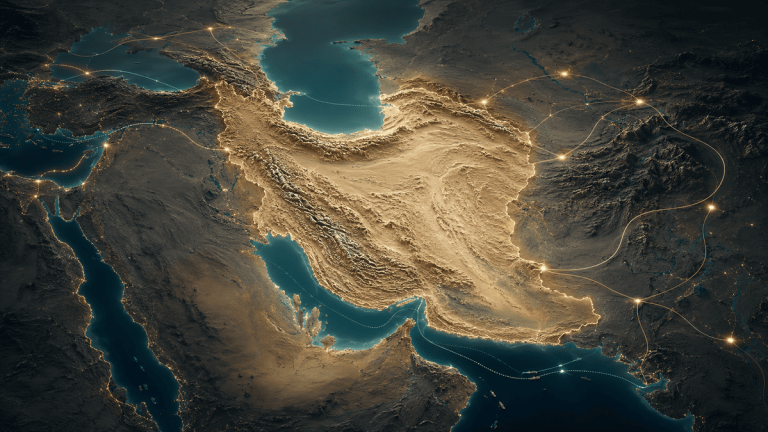
Access to advanced chips and large-scale computing remains restricted and expensive. Cross-border payments and access to international cloud services are unreliable. Internet restrictions and shutdowns can disconnect businesses from essential tools, repositories and APIs. Technical research in 2026 documented the centralised architecture through which large portions of Iran’s international connectivity can be interrupted.
Data quality is another major barrier. Many organisations possess years of records but cannot use them effectively because the information is incomplete, duplicated, unstructured or stored across incompatible systems.
Management capacity may prove more limiting than model quality. An organisation cannot successfully adopt AI if it has no clear process, accountable owner, usable performance metric or mechanism for employees to challenge an automated output.
Regulation also remains incomplete. Iran has a strategic AI framework, but it does not yet have a mature, unified system covering liability, data protection, automated discrimination, medical validation, intellectual property and high-risk AI deployment.
Finally, AI can become a tool of surveillance, censorship and information manipulation as easily as a tool of productivity. Facial recognition, behavioural profiling and automated content monitoring raise serious questions about privacy, consent and accountability. A sustainable AI ecosystem requires more than technical capability; it requires limits on how that capability can be used.
What AI Will Do to Iranian Employment
The public discussion often moves between two extremes: AI will eliminate most jobs, or AI will simply make everyone more productive. Neither is a useful description of the near-term Iranian reality.
AI primarily changes tasks before it eliminates occupations.
Routine writing, translation, customer support, basic coding, administrative processing and first-stage analysis are likely to become cheaper. Entry-level workers in these fields may face pressure because some of the tasks through which they previously learned their profession can now be automated.
At the same time, AI increases the value of judgement, responsibility, customer relationships, technical integration and domain knowledge. A capable lawyer using AI may outperform a larger conventional team. An engineer with access to reliable plant data may supervise more assets. A small exporter may analyse markets that previously required an external consulting firm.
For Iran, there is an additional economic complication: labour can be relatively inexpensive while imported technology and computing capacity are costly. This weakens the business case for using AI merely to replace employees.
The strongest deployments will therefore target scarce expertise, delays, errors, downtime, energy waste and missed demand rather than labour cost alone.
Three Possible Futures for AI in Iran
Iran’s AI future will depend less on whether its citizens continue using AI and more on whether institutions can convert use into capability.
Scenario One: Widespread Use, Limited Transformation
In this scenario, individuals continue adopting foreign and open-source tools, but companies fail to clean their data or redesign operations.
AI improves personal productivity, yet most organisations remain structurally unchanged. The domestic market fills with generic chatbots and short-lived applications. Iran produces capable engineers but loses many of them to foreign markets.
This is the most likely outcome if current constraints remain unresolved.
Scenario Two: A Localised Applied-AI Economy
Here, Iranian companies focus on smaller models, private deployment, Persian knowledge systems and vertical industry applications.
Banks, hospitals, manufacturers and logistics companies adopt AI gradually through controlled, human-supervised workflows. Domestic infrastructure remains behind frontier markets, but it is sufficient to support economically useful applications.
This is the most realistic positive scenario because it does not require Iran to compete directly in training the world’s largest foundation models.
Scenario Three: AI as Part of Economic Reconnection
A broader improvement in international connectivity, investment access and commercial relations would radically expand the opportunity.
Iranian talent and local market knowledge could combine with foreign capital, cloud infrastructure, advanced hardware and regional distribution. International firms could enter through partnerships with local data and implementation companies. Iranian teams could serve both the domestic market and neighbouring economies.
In this scenario, the companies that built trusted local infrastructure during isolation would become valuable strategic partners after reconnection.
What Investors and Companies Should Look For
The label “AI company” is becoming almost meaningless. The important question is what the company owns that cannot be reproduced by accessing the same underlying model.
Strong opportunities will normally have at least one of the following advantages:
- proprietary or difficult-to-collect data;
- access to a valuable customer base;
- integration with an organisation’s core workflow;
- specialist knowledge in a regulated or industrial field;
- a secure local-deployment capability;
- measurable cost, quality or revenue improvements;
- an evaluation and accountability system that customers can trust.
Investors should be cautious around consumer chatbots without distribution, generic content tools, expensive national-scale model projects without a compute strategy and companies that describe ordinary software automation as artificial intelligence.
The best Iranian AI companies may not initially look like global AI startups. They may appear to be healthcare software providers, industrial engineering firms, financial infrastructure businesses, agricultural platforms or professional-service companies whose real advantage is that AI allows them to operate in a fundamentally more efficient way.
The Strategic Window
Iran is unlikely to lead the global contest for the largest models or the most advanced semiconductor clusters. That does not mean it must remain a passive consumer of artificial intelligence.
Most of the economic value of AI will not belong exclusively to the companies that train foundation models. It will also belong to the organisations that apply those models to real data, difficult workflows, local languages and industries where mistakes have consequences.
Iran has several ingredients for building that layer: a large connected population, strong technical education, extensive industrial capacity, substantial unmet demand and an economy full of expensive inefficiencies.
Its weakness is the absence of reliable connections between those ingredients.
The decisive question is therefore not whether Iran will “adopt AI.” That process has already begun. The real question is whether AI remains an informal tool used around the edges of the economy, or becomes part of the infrastructure through which Iranian companies produce, trade, diagnose, manage resources and make decisions.
That transition will define both the economic value of AI in Iran and the companies positioned to capture it.