The Cost of Lost Trust: Why Oman Is Becoming a More Serious Alternative for Iranian Business
For more than two decades, Dubai was the natural offshore base for a large part of Iranian private business. Geography was only one reason. What made the UAE unusually valuable was the combination of proximity to Iran with access to an international financial, logistical and commercial system that Iranian companies could rarely reach directly. A founder could live in Dubai, register a company there, meet foreign partners, connect to global flights, hire international talent and operate within an ecosystem sophisticated enough to support almost any kind of business.
That made the UAE more than a neighbouring market. For many Iranians, it became part of the infrastructure of doing international business.
The events of 2026 have not erased those advantages, but they have exposed a weakness that will be difficult to forget. The question is no longer simply whether Dubai remains an attractive place to do business. It clearly does. The more uncomfortable question is whether an Iranian entrepreneur can still regard the UAE as a dependable long-term base when political and security conditions deteriorate.
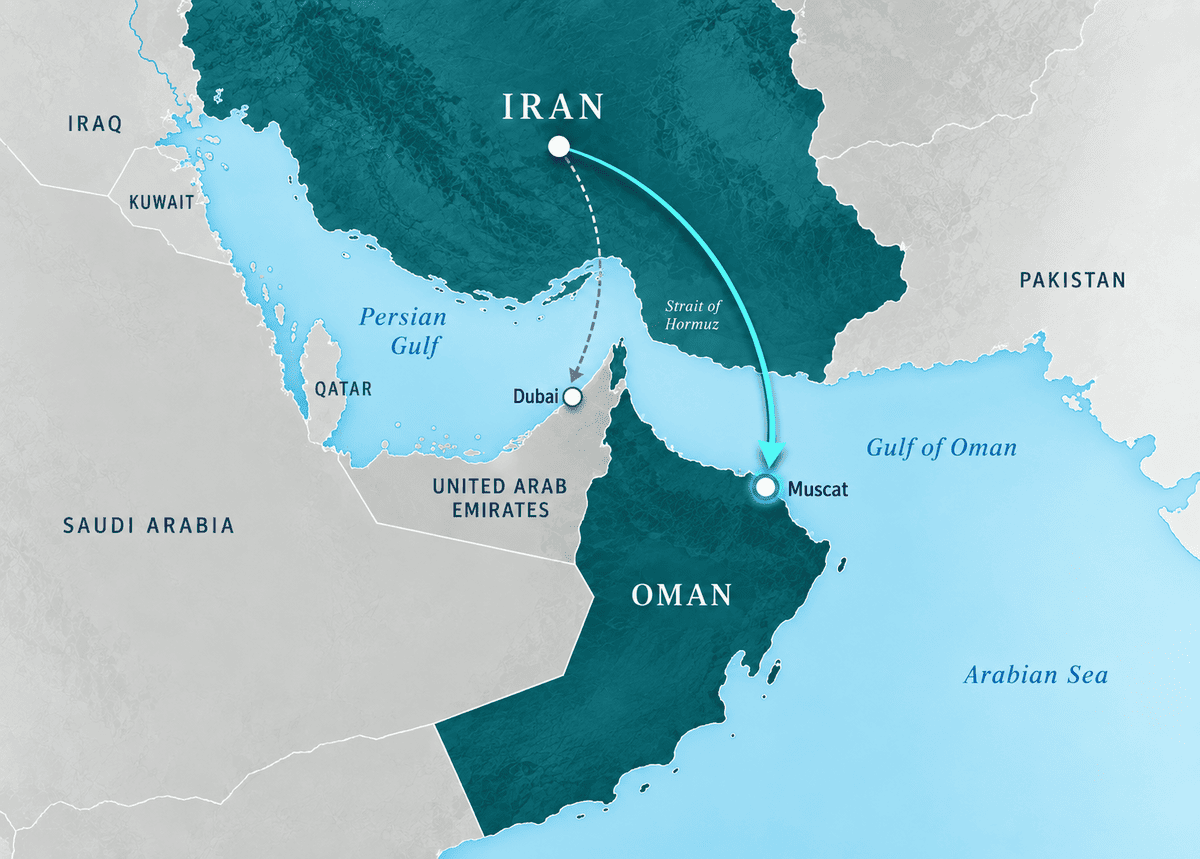
That question is also changing how Oman is viewed by Iranian businesses. Muscat cannot match Dubai’s scale, capital or commercial density, but it may offer something that has suddenly become much more valuable: continuity. For Iranian entrepreneurs reconsidering where to place their international operations, Oman is beginning to look less like a secondary Gulf market and more like a potential resilience base.
This distinction matters because countries such as the UAE do not compete for international capital only through tax rates, free zones and airports. They also compete through trust. When a foreign entrepreneur moves a company, assets, family and professional network into another jurisdiction, the investment is made partly on the assumption that the relationship will remain reasonably predictable. If that assumption weakens, the economic consequences can last much longer than the crisis that caused it.
What changed in 2026
In April, Emirates announced that Iranian nationals were no longer permitted to enter or transit through the UAE. Flydubai later clarified that Iranian holders of UAE Golden Visas were exempt, but the broader restriction nevertheless marked a significant break from what many Iranian travellers had long taken for granted: the ability to use the UAE as a reliable regional gateway.
The rupture became more serious in August. On 19 August, the UAE Ministry of Foreign Affairs announced that all trade, commercial exchanges and financial transactions with Iran had been halted until further notice as a consequence of the regional escalation.
There are obvious explanations for decisions taken during a major regional conflict. Governments have national-security obligations, financial-system concerns and international relationships that sometimes force measures they would not consider under normal circumstances. The point is not that the UAE had no rationale for acting as it did.
The point is that Iranian investors now know what the outcome can look like.
For years, Dubai encouraged foreign entrepreneurs to think beyond short-term trading relationships. It sold property, long-term residency, business licences and an entire lifestyle built around the idea that the UAE could become a durable home for international capital. Iranian entrepreneurs were among those who responded to that proposition. Many did not merely visit Dubai to conduct transactions; they reorganised their lives and businesses around it.
That creates a higher standard of trust than an ordinary commercial relationship. If people are encouraged to place substantial capital and years of their lives inside a jurisdiction, they will inevitably ask how durable that relationship remains when circumstances become difficult.
For Iranian businesspeople, 2026 provided an answer that many will find uncomfortable.
The issue is not necessarily that they will stop using Dubai. Most commercially serious Iranian entrepreneurs understand perfectly well what the UAE still offers, and there is no equivalent regional ecosystem that can simply reproduce Dubai’s concentration of capital, logistics, professional services and international connectivity.
What has changed is the logic of dependence.
Before 2026, concentrating a large share of one’s international structure in the UAE could appear efficient. After 2026, the same decision also looks like a geopolitical concentration risk.
The economic value of trust
Business-location decisions tend to be reduced to measurable variables. Investors compare corporate taxes, licensing costs, residency programmes, banking systems, property rights, infrastructure and access to customers. Those variables matter, but they do not fully describe the value of a jurisdiction.
There is also the question of continuity.
A company needs to know not only whether a country is convenient when relations are good, but whether it remains usable when they are not. Can its owners enter? Can contracts still be executed? Can the company maintain its banking relationships? Can management reach employees and counterparties? Does nationality suddenly become an operational risk?
This is where trust acquires an economic price.
A country with a smaller market and a less developed business ecosystem may still become attractive if investors perceive that it offers greater consistency in difficult periods. That advantage is easy to underestimate because it produces little value during normal times. It becomes visible only when something goes wrong.
Oman has spent decades building precisely this kind of reputation, although until recently it was discussed mostly in geopolitical rather than commercial terms.
The Sultanate’s foreign policy has traditionally sought to maintain relationships across regional divides rather than maximise alignment with one camp. Its relationship with Iran has survived periods in which Tehran’s relations with many other Gulf capitals became considerably more difficult. That policy does not make Oman immune to regional pressure, nor does it mean that Muscat will always choose economic relations over its own security interests. But it does create a different starting point.
The contrast became particularly visible this year.
While Iranian access to the UAE tightened, Oman continued to list Iran among the countries whose nationals can enter visa-free for visits of up to 14 days. Iran is included in the first category of countries eligible for that exemption, rather than the conditional second category that requires certain travellers to hold visas or residence permits from other countries.
A fourteen-day tourist exemption should not be confused with business residency or banking access. On its own, it proves very little. Yet in the context of 2026 it carries a larger meaning: Oman did not respond to the regional crisis by broadly closing its door to Iranian citizens.
For entrepreneurs deciding where to establish their next regional foothold, that record will matter.
Oman has been quietly building the institutional foundations as well
The argument for Oman would be weak if it rested only on diplomatic friendliness. Business decisions require legal and economic infrastructure, and here the relationship between Tehran and Muscat has also been moving in a different direction.
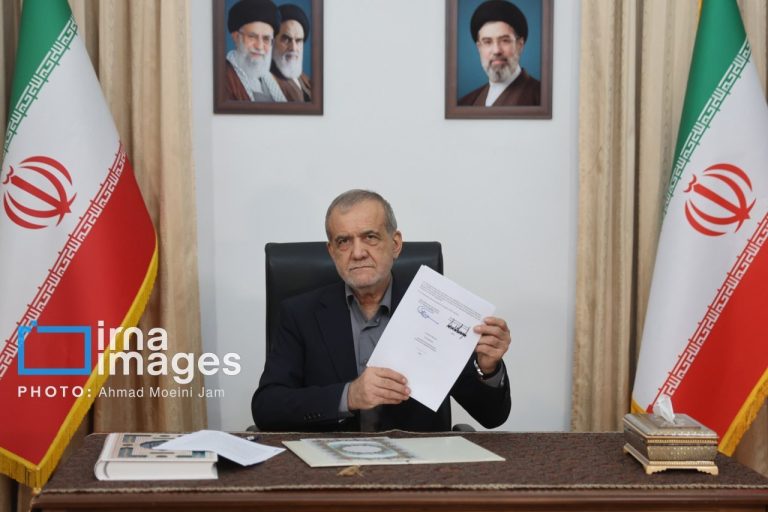
In May 2025, the two governments signed an agreement on the reciprocal promotion and protection of investments. Oman formally ratified the agreement in September of the same year.
The language around the economic relationship was not limited to government diplomacy. During the Iranian president’s visit to Muscat in May 2025, Omani and Iranian business leaders also met to discuss trade and investment cooperation, including closer links between the two countries’ economic corridors and ports and efforts to facilitate financial transfers.
More broadly, Oman has been making itself easier to use as a long-term base for foreign investors. Its official Golden Residency programme now offers qualifying investors and entrepreneurs a renewable ten-year residence route. The Ministry of Commerce has stated a minimum investment requirement of OMR 200,000 and presents the programme explicitly as a tool for creating long-term relationships between Oman and international investors.
None of this makes Muscat a new Dubai. The comparison would be misleading.
Dubai’s advantage is scale. Its airport network, venture ecosystem, corporate-service sector, property market, international population and concentration of global firms remain in another category. An entrepreneur trying to raise a technology round, meet dozens of regional investors in a week or build a sales organisation across the Gulf will generally find far more activity in Dubai than in Muscat.
Oman’s emerging advantage is different. It may be able to offer Iranian entrepreneurs a place where the relationship between nationality and commercial access is less volatile.
For a long time, that sounded like a secondary consideration. After 2026, it does not.
Where Oman still has to prove itself
There is nevertheless a danger in turning the current moment into an overly optimistic story about Oman. Political access is only one layer of a functioning international business base. The much harder issue for Iranian entrepreneurs remains banking.
An Omani company does not exempt its beneficial owner from sanctions screening, correspondent-bank requirements or the internal risk policies of international financial institutions. Iranian investors may still face intensive source-of-funds reviews, additional compliance requirements and, depending on their circumstances, outright rejection from individual banks.
This is the point at which Oman’s opportunity will either become commercially meaningful or remain largely symbolic.
If legitimate Iranian investors with transparent sources of wealth can incorporate companies but cannot establish dependable banking relationships, Muscat will not become a serious international base for them. Friendly political relations cannot substitute for functioning financial infrastructure.
The sensible approach for any Iranian entrepreneur considering Oman is therefore not to rush into incorporation or property investment. Banking feasibility should come first. Only once reliable account access, compliance requirements and capital-transfer routes have been tested does the wider investment proposition become meaningful.
This is also where Oman could differentiate itself strategically. It does not need weaker compliance rules; in fact, that would undermine the entire proposition. What it needs is predictable compliance: clear standards that allow legitimate capital to understand in advance whether it is acceptable and what documentation is required.
Predictability, again, is the real product.
Dubai’s challenge is not losing Iranian business overnight
The UAE should probably be less concerned about an immediate exodus of Iranian companies than about a more subtle change in behaviour.
Dubai benefited for years from the economics of concentration. Once an entrepreneur had established residency, opened a company, acquired property, built banking relationships and developed a local network, the cost of moving elsewhere became substantial. That inertia strengthened the UAE’s position almost automatically.
The events of 2026 may have weakened that dynamic.
An entrepreneur who has been forced to consider a second jurisdiction is unlikely to ask only whether it makes sense to return to Dubai when conditions normalise. A more important question will arise: why recreate the same concentration of risk?
That could lead to a different pattern in which Iranian founders continue to use Dubai extensively while deliberately keeping part of their corporate structure, residency, banking or assets elsewhere.
In other words, the lasting consequence may not be departure from the UAE. It may be diversification away from dependence on it.
This would still represent a meaningful loss for Dubai because the most valuable foreign capital is not merely capital that passes through a country. It is capital that commits to it.
Trust determines the difference.
Oman does not need to replace Dubai
Seen this way, the opportunity for Oman is more realistic than the claim that Muscat might somehow displace Dubai as the Gulf’s main business centre.
It does not need to.
An internationally active Iranian company could eventually operate across several jurisdictions for different purposes. Dubai could continue to serve as a centre for clients, investors and regional networking whenever access is available. Oman could provide an additional legal and residency base. Other jurisdictions in Turkey, Europe or Asia could provide further banking or market access, while Iran itself remains the centre for production, talent or domestic operations.
That structure may look less elegant than putting everything in one place, but it is considerably more resilient.
For Iranian entrepreneurs, resilience is becoming a legitimate business objective rather than an abstract geopolitical concern.
The lesson of 2026 is that the quality of a jurisdiction cannot be judged only by how efficiently it operates in good times. Its behaviour under pressure matters as well.
Dubai has spent decades proving that it can create extraordinary economic opportunity. What it will now have to prove to Iranian investors is that the relationship is durable enough for them to trust it with the same degree of concentration again.
Oman, meanwhile, has an unusual opportunity. It has maintained access, strengthened its formal investment relationship with Iran and built a more serious long-term residency proposition at precisely the moment when many Iranian entrepreneurs have been reminded that geopolitical continuity has economic value.
It still lacks much of Dubai’s commercial depth, and banking remains the critical unresolved test. But it does not need to outperform the UAE across every dimension. If it can provide Iranian businesses with reliable access, credible residency, predictable regulation and workable financial infrastructure, it can occupy a position that is increasingly valuable in its own right.
For years, Dubai’s strongest argument to Iranian business was opportunity.
Oman’s emerging argument is continuity.
In a more unstable Gulf, the gap between those two propositions may be worth far more than it once appeared.