Iran’s Copper Opportunity Is Bigger Than Its Mines
Copper is becoming one of the most strategically important industrial metals in the world.
Power-grid expansion, electric vehicles, data centres, renewable energy systems and electrification are all pushing copper demand higher, while new mine supply remains difficult, slow and capital-intensive. Recent market conditions reflect that tension: copper prices have moved to historically elevated levels, and concerns over future supply are becoming increasingly structural rather than cyclical.
Iran enters this environment with an unusual combination of advantages.
It already has a substantial copper resource base, an established mining and processing industry, large operating complexes such as Sarcheshmeh and Sungun, and a domestic industrial base capable of consuming copper in construction, power infrastructure and manufacturing.
But the real opportunity is not simply the size of the resource.
The more important question is whether Iran can convert geological potential into competitive, scalable and exportable copper production.
Iran already has a meaningful copper base
According to the U.S. Geological Survey, Iran produced an estimated 54 million tonnes of copper ore in 2024, with contained copper output of roughly 322,000 tonnes.
The country also produced approximately 314,000 tonnes of copper in concentrate, while primary refined copper production reached around 223,000 tonnes.
These figures place Iran well beyond the stage of being merely an exploration story.
It already has an integrated value chain that includes mining, concentration, smelting and refining.
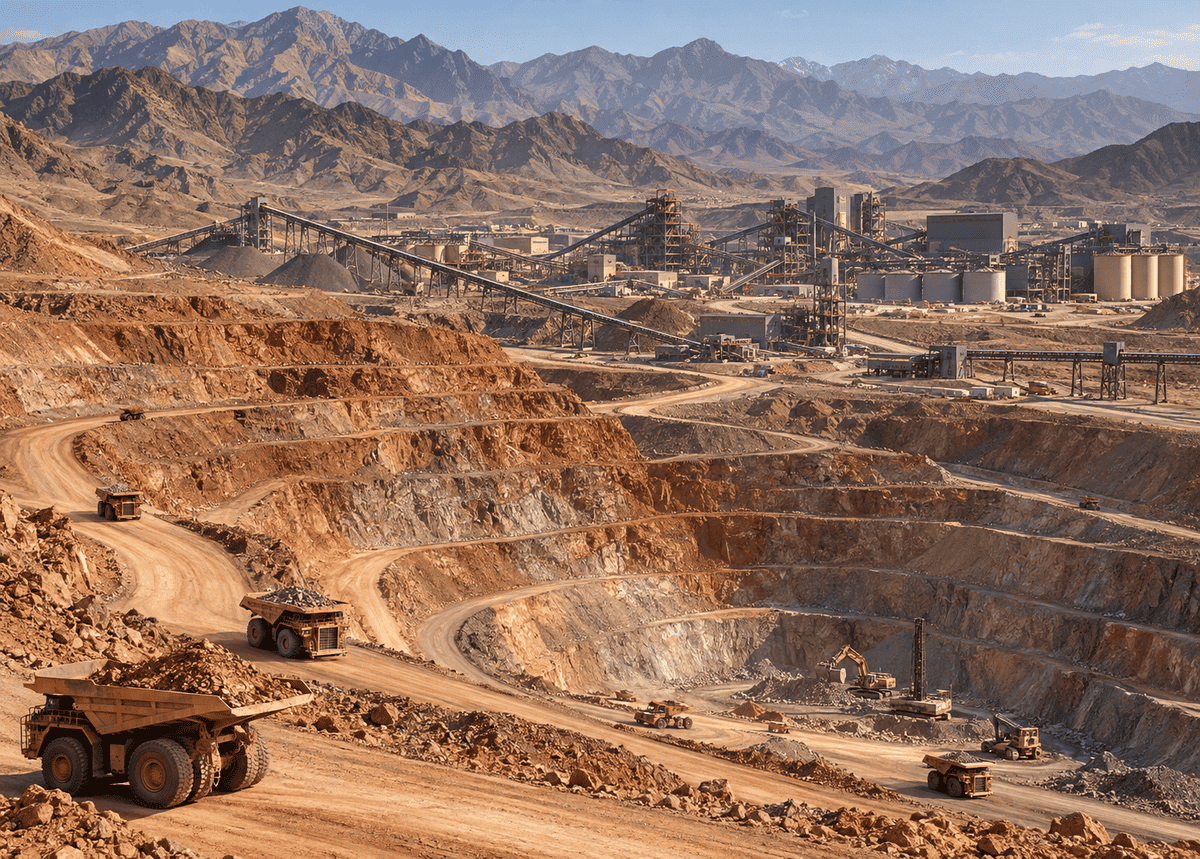
The most important producing assets are concentrated in Kerman and East Azerbaijan, particularly around Sarcheshmeh, Sungun and the newer Darehzar and Dare Aloo developments.
Several of those assets have also been expanding.
At Sarcheshmeh, additional slag-flotation capacity increased concentrate production capacity by about 80,000 tonnes per year, taking total capacity to roughly 810,000 tonnes per year.
Dare Aloo added around 100,000 tonnes per year of concentrate capacity, while Darehzar expanded to approximately 173,000 tonnes per year.
This matters because Iran’s copper opportunity is increasingly about throughput and downstream conversion, not simply discovering new deposits.
The reserve story is improving
The geological picture is also becoming stronger.
At Sungun alone, proved and probable reserves were reported at around 2.49 billion tonnes of ore at an average grade of approximately 0.53% copper, a significant increase from the previous reported reserve base.
That gives Iran a long-duration resource base.
But reserve size can be misleading if it is viewed in isolation.
Copper investors care just as much about: ore grade; strip ratio; recovery rate; water availability; electricity reliability; processing capacity; access to equipment; capital intensity; and the cost of moving concentrate and finished metal.
A larger reserve only becomes economically meaningful when the surrounding system can extract and process it efficiently.
This is where Iran’s real investment question begins.
The bottleneck is not geology
Iran’s main constraint in copper is unlikely to be a lack of ore.
The more difficult challenge is converting reserves into dependable output.
Mining and concentration are highly dependent on electricity and water. Both are increasingly constrained in Iran, particularly in industrial provinces where large mining, steel and manufacturing projects compete for the same infrastructure.
Copper concentration and smelting are also energy-intensive.
An operation that has attractive geological economics can quickly become less competitive if power interruptions reduce plant utilization or if water scarcity raises operating costs.
This means that the marginal tonne of Iranian copper may increasingly depend on infrastructure investment outside the mine itself.
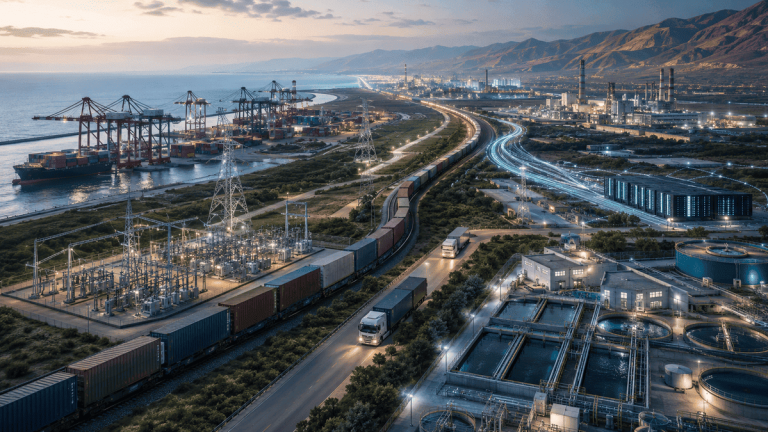
Transmission capacity, captive power, water recycling, desalination, rail logistics and equipment availability may matter almost as much as the orebody.
For investors and suppliers, that is important.
The opportunity is not limited to owning a mine.
It also exists in the infrastructure required to make the mine productive.
Processing capacity determines how much value Iran retains
Copper economics change significantly depending on where value is captured.
Exporting ore captures relatively little value.
Concentrate captures more.
Refined copper captures more again.
And downstream products such as wire rod, cable, tube and electrical components move further into industrial value creation.
Iran already operates across several of these stages, but expansion in mine output must be matched by expansion in concentration, smelting and refining capacity.
Otherwise, bottlenecks simply move downstream.
For example, new concentrate capacity at Dare Aloo, Darehzar and Sungun improves upstream output, but if smelting capacity does not increase proportionately, Iran may have to export more concentrate rather than capture the value from refining domestically.
That is not necessarily negative.
Concentrate exports can still be commercially attractive, especially during periods of tight global supply.
But the strategic return is different.
A mature copper strategy should therefore ask not only how many tonnes Iran can mine, but which stage of the value chain generates the highest risk-adjusted return under Iran’s operating constraints.
Global demand is strengthening the investment case
The international environment is unusually supportive.
Copper demand is being pushed by multiple structural forces at the same time.
Electric vehicles use materially more copper than conventional vehicles.
Power grids require very large volumes of copper for transmission, distribution and grid reinforcement.
Data centres and AI infrastructure are adding another source of electricity-intensive investment, while renewable-energy systems add additional demand through cabling, transformers and storage infrastructure.
At the same time, supply growth is difficult.
Large copper mines often require more than a decade from discovery to production. Ore grades are declining in several mature mining regions, permitting is becoming more difficult, and large new projects increasingly require significant water, energy and infrastructure investment.
That is why governments and manufacturers are increasingly treating copper as a strategic material rather than simply another commodity.
The United States, for example, has been actively reassessing its dependence on imported copper while concerns over tariffs, refining capacity and domestic supply have contributed to unusually tight market conditions.
This environment raises the value of large undeveloped or underdeveloped resource bases.
Iran is one of them.
But access to global capital remains the central disadvantage
The strongest global copper projects compete for international capital, mining equipment, engineering expertise and long-term offtake contracts.
Iran does not compete on equal terms.
Sanctions restrict access to financing, technology, specialist equipment, international insurers and some categories of mining services.
This creates a paradox.
High global copper prices make Iranian copper assets more valuable, but the same geopolitical conditions that increase commodity volatility can make those assets harder to develop.
That changes the type of investor likely to participate.
Large Western mining groups are unlikely to be the first movers.
More realistic partners are companies from countries with existing commercial exposure to Iran, equipment suppliers willing to structure non-traditional payment arrangements, regional investors and domestic industrial groups.
The investable opportunity therefore looks different from a conventional global mining project.
China is the obvious external market, but not the only one
China remains the world’s dominant copper consumer and the most natural external destination for Iranian concentrate or refined metal.
But relying too heavily on a single buyer has disadvantages.
The copper market is increasingly competitive, and countries such as the Democratic Republic of Congo, Chile, Peru and Zambia already supply enormous volumes into global markets.
The United States has also sharply increased copper imports from Congo, showing how quickly trade flows can shift when price and supply incentives change.
Iran therefore needs more than production growth.
It needs market access, logistics reliability and pricing competitiveness.
That means understanding whether Iranian copper can reach buyers at a sufficiently attractive delivered cost after accounting for sanctions friction, freight, payment complexity and insurance.
Those variables may matter more than headline mine costs.
Kerman and East Azerbaijan offer different investment cases
Iran’s copper opportunity is not geographically uniform.
Kerman has the deepest existing copper ecosystem.
Sarcheshmeh, Darehzar and Dare Aloo create a large concentration of mining and processing capacity, supporting suppliers, engineering services and downstream industrial activity.
East Azerbaijan, particularly around Sungun, offers a different profile.
Sungun’s large reserve base gives it long-term strategic importance, but expanding downstream processing and associated infrastructure will determine how much economic value remains inside the province.
These two regions should therefore not be evaluated purely by reserve size.
A serious comparison should include:
- existing concentration capacity;
- smelting and refining access;
- power reliability;
- water stress;
- rail and road logistics;
- proximity to export corridors;
- supplier ecosystem;
- and expansion pipeline.
For foreign industrial companies, the better opportunity may ultimately be in supporting these ecosystems rather than directly owning mining assets.
The real opportunity may be outside the mine
This is perhaps the most important point.
Iran’s copper story is often framed as a mining story.
It is increasingly an infrastructure and industrial-services story.
If copper production expands, demand grows for:
mining machinery; crushers and mills; flotation systems; pumps; electrical equipment; process control; water treatment; tailings management; power generation; rail logistics; smelting equipment; maintenance services; and downstream fabrication.
These opportunities are often smaller, easier to structure and less exposed than direct mine ownership.
For foreign suppliers evaluating Iran, that distinction matters.
The investable copper ecosystem may be much broader than the mines themselves.
What investors should watch
The next phase of Iran’s copper sector will depend on a small number of measurable indicators.
The first is whether newly discovered or reclassified reserves convert into production plans with funded CAPEX.
The second is whether concentrate capacity continues to expand faster than smelting and refining.
The third is industrial power reliability.
The fourth is access to water.
The fifth is the ability of Iranian producers to maintain export access to China and other Asian buyers.
And the sixth is whether downstream copper manufacturing grows alongside mining.
If those indicators improve together, Iran could capture significantly more value from the global copper cycle.
If they do not, larger reserves may simply remain larger numbers on geological reports.
The investment thesis
Iran does not need copper prices to rise indefinitely for the sector to remain attractive.
The more important structural fact is that global electrification requires large volumes of new copper supply, while bringing new supply online is becoming increasingly difficult.
Iran already has resources, operating mines, processing capacity and a growing project pipeline.
Its competitive weakness is infrastructure, capital access and international connectivity.
That creates a very specific opportunity.
The strongest investments may not be bets on the copper price itself.
They may be investments in the systems required to convert Iranian copper from ore in the ground into reliable industrial output.
That is where the next stage of Iran’s copper opportunity will be decided.