Who Is Still Traveling to Iran? Mapping the Tourism Markets That Survived the Shock
Iran’s inbound tourism market is considerably smaller than it was two years ago. But the decline has not been evenly distributed.
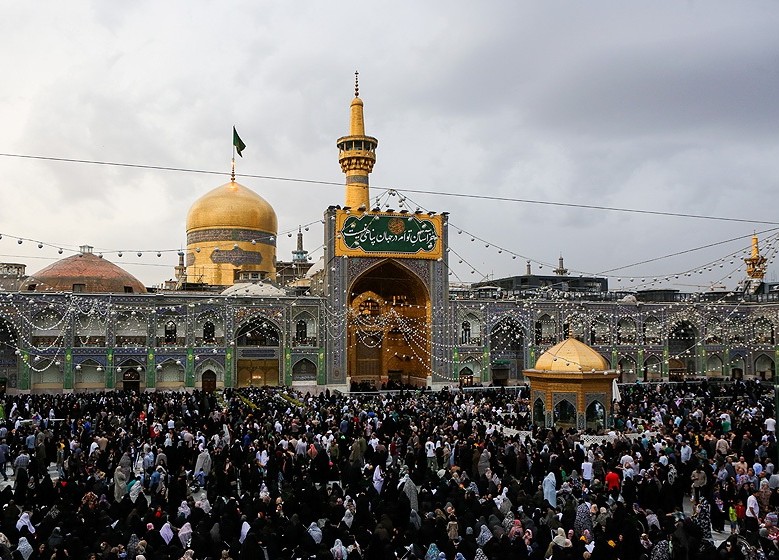
The visitors who are still entering the country increasingly come from nearby markets, often through land borders, and many travel for reasons that are less discretionary than a conventional holiday: pilgrimage, medical treatment, family visits, trade or other cross-border activity.
That distinction matters. For hotels, hospitals, travel companies and hospitality investors, the relevant question is no longer simply whether inbound tourism is recovering. It is which parts of demand have survived, and where that demand is actually being spent.
A smaller market, with a different shape
Iran recorded about 7.4 million foreign arrivals in the Iranian year ending March 2025. The following year, the figure fell to approximately 6.21 million, a decline of just over 16%.
The deterioration became much sharper in early 2026. During the first three months of the current Iranian year, Iran recorded 928,746 foreign arrivals, compared with about 1.91 million in the same period a year earlier — a decline of 51.5%.
By the end of August, however, the cumulative figure had reached about 2 million visitors for the first five months of the year. The improvement from the very weak spring does not amount to a return to the previous market structure. Official statements indicate that 56% of those five-month arrivals were linked to religious tourism.
The useful signal is therefore not simply that some arrivals have returned. It is that the remaining market is becoming more concentrated around forms of travel that can continue despite higher perceived risk and weaker international connectivity.
Iraq is the anchor market
No source market illustrates that concentration more clearly than Iraq.
During the first three months of 2026, 654,337 arrivals were recorded from Iraq, compared with 96,040 from Afghanistan and 87,884 from Turkey. Iraq therefore accounted for the majority of all recorded arrivals during the period.
The relationship is larger than a temporary post-shock effect. Iran’s tourism minister said in September that around 3.6 million Iraqis currently travel to Iran annually, alongside a similar flow of Iranians in the other direction. Iran and Iraq are now discussing substantially increasing bilateral tourism flows.
This is not one homogeneous tourism market.
Iraqi demand includes pilgrimage, healthcare, shopping, family and social visits and other forms of cross-border travel. The spending pattern of an Iraqi family visiting Mashhad for pilgrimage and treatment is very different from that of an international cultural tourist visiting Tehran, Isfahan and Shiraz.
For the Iranian tourism economy, that distinction changes which assets benefit.
Mashhad and Razavi Khorasan sit at the intersection of pilgrimage, accommodation, healthcare, retail and passenger transport. Qom has a more concentrated religious-tourism proposition. Tehran captures part of the higher-value healthcare and commercial traffic, while western and southwestern border corridors benefit from transport and passenger flows even when travelers ultimately spend most of their stay elsewhere.
The scale of Iraqi travel therefore makes Iraq less a tourism “segment” than a market of its own.
Pilgrimage has become a defensive part of the market
The strength of religious tourism helps explain why inbound travel has not fallen uniformly.
Pilgrimage has two characteristics that make it relatively resilient. First, the motivation to travel is stronger than for discretionary leisure tourism. Second, Iran’s largest pilgrimage markets are geographically close and can use land transport when aviation is disrupted.
The current data support that pattern. During spring 2026, foreign arrivals through air borders fell 80.1% year on year, while maritime arrivals dropped 79.1%. Arrivals through land borders also declined, but by a materially smaller 41.7%.
That difference is important.
International leisure demand usually depends heavily on functioning aviation networks, tour operators, insurance and perceptions of destination safety. Regional pilgrimage and cross-border travel can continue through a more flexible mix of buses, private vehicles and land crossings.
This helps explain why Iraq remains dominant and why Afghanistan, Turkey, Turkmenistan and Azerbaijan have remained among Iran’s largest recorded source markets even during the downturn.
Medical tourism adds another layer of resilient demand
Medical travel follows a similar logic.
Patients do not choose destinations in exactly the same way as leisure tourists. Price, medical capability, language, proximity and waiting time can outweigh some of the factors that would stop a conventional holiday.
Iran has historically drawn much of its foreign patient traffic from Iraq and Afghanistan. In 2024, the then health minister said around 1.2 million medical tourists from 64 countries had visited Iran in the preceding year, with Iraq and Afghanistan the largest sources. Pakistan, Oman, Bahrain, Armenia and Tajikistan were also cited among important markets.
That 2024 figure should not be treated as a measure of the current 2026 market. The operating environment has changed substantially. But it does identify the underlying geography of demand.
For hospitals and healthcare providers, this makes Mashhad, Tehran and Shiraz particularly relevant. The opportunity extends beyond hospital beds to diagnostics, accommodation for accompanying family members, interpreters, ground transport, pharmacy purchases and recovery stays.
There is also significant overlap between pilgrimage and healthcare. A visitor does not necessarily belong to only one category. An Iraqi or Afghan family can combine treatment, religious travel, shopping and family visits in the same trip.
That overlap is one reason aggregate “tourist arrival” figures can obscure more than they reveal.
Afghanistan remains important, but should be interpreted carefully
Afghanistan was Iran’s second-largest source of recorded arrivals during spring 2026, behind Iraq.
The travel relationship includes medical treatment, pilgrimage, education, family links and other forms of mobility. Iranian and Afghan officials have continued discussing facilitation specifically across tourism, medical travel, education and pilgrimage.
For market analysis, however, Afghan arrivals require caution.
Iranian border statistics count entries, but available aggregate datasets do not consistently distinguish between leisure tourists, patients, business travelers, family visitors and other passengers. The Ministry of Cultural Heritage’s own published statistics have this limitation: the headline dataset records border movements without providing a complete purpose-of-travel breakdown.
Calling every foreign entry a conventional tourist would therefore overstate the addressable hospitality market.
What can be said with more confidence is that Afghanistan remains an important cross-border demand market, particularly for healthcare and other purpose-driven travel.
The Gulf, Caucasus and Central Asia are smaller, but strategically different
The same distinction is useful when looking beyond Iraq and Afghanistan.
In 2025, Iran’s main recorded source markets included Turkmenistan, Azerbaijan, Armenia, Bahrain, Kuwait, Oman and Tajikistan, alongside larger markets such as Iraq, Afghanistan and Turkey. In the first three months of 2026, Turkmenistan and Azerbaijan remained among the five largest origins, while Armenia was also among the top ten.
These markets should not be grouped together.
The Caucasus and Central Asian markets benefit from proximity and, in some cases, practical land access. Gulf markets have stronger potential for healthcare, religious travel and higher-spending short stays, but are more dependent on aviation.
That matters under current conditions. A market that requires reliable air links is exposed to a different recovery path from one that can continue moving through land borders.
For that reason, counting nationalities alone is not enough. Mode of entry has become a leading indicator of tourism resilience.
The winners are not necessarily Iran’s traditional tourism destinations
The new demand mix also changes the geography of the tourism economy.
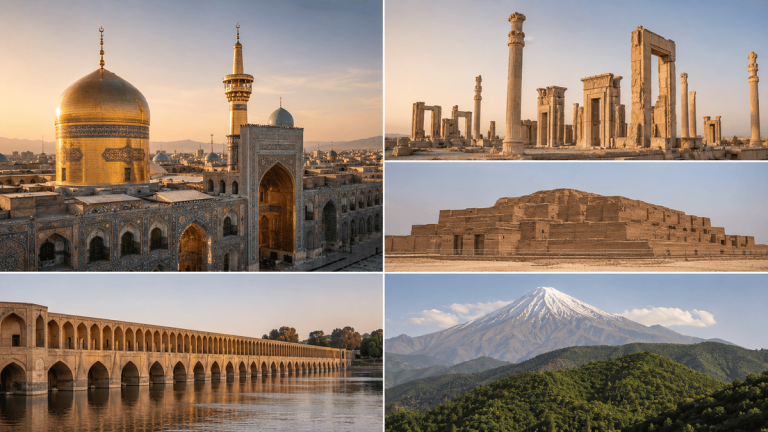
Historically, a recovery in Iranian inbound tourism might have been expected to benefit the classic cultural route through Tehran, Isfahan, Yazd and Shiraz.
The current pattern is different.
Mashhad has perhaps the strongest combination of resilient demand drivers because it combines pilgrimage with healthcare, accommodation, food, retail and transport. Qom has a narrower but defensible pilgrimage market. Tehran remains relevant for specialized medical care and business travel.
Border provinces can also experience substantial passenger volumes without capturing an equivalent share of tourism spending. A traveler crossing through Khuzestan, Kermanshah or another border province may move quickly to a final destination elsewhere.
Conversely, destinations that depend heavily on international air arrivals and discretionary leisure tourism can remain weak even while national arrival numbers improve.
For hospitality investors, that means a national recovery number is a poor proxy for hotel demand in any individual city.
Arrival numbers are no longer enough
The biggest problem in assessing Iran’s inbound tourism market is now data quality rather than a shortage of headline numbers.
To understand where commercial demand actually exists, six variables matter more than the national arrival total:
country of origin, purpose of travel, border or airport used, destination province, length of stay and average expenditure.
Hotel occupancy by province would provide another critical layer.
Without those variables, two million arrivals could represent very different markets. A short land-border visit, a week-long pilgrimage, a medical stay involving several family members and a conventional cultural holiday all produce very different economic effects.
The distinction is especially important in pilgrimage markets, where visitors may use religious accommodation, stay with relatives or choose lower-cost lodging instead of conventional hotels.
The same applies to medical tourism. Patient numbers alone do not reveal the value captured by hospitals, hotels, transport companies and surrounding services.
What the current market is telling us
Iran has not retained its pre-shock tourism mix.
The segment that has proved most durable is a regional, neighboring-country tourism economy built around specific reasons to travel.
Iraq is the central market. Pilgrimage provides the largest visible buffer. Afghanistan remains significant, particularly for cross-border and medical demand. Turkey, Turkmenistan, Azerbaijan and other nearby markets continue to contribute flows, while Gulf demand retains value in healthcare and religious tourism but faces greater connectivity risk.
This does not mean conventional international leisure tourism has recovered. The steep decline in air arrivals suggests the opposite.
For operators and investors, the more useful question is therefore not when Iran will return to its old tourism numbers.
It is which travelers still have a strong enough reason to come, and which cities, hospitals, hotels and transport corridors can capture their spending when they do.