The Iran Equation After America’s Political Reversal
Democrats have taken control of Congress, fundamentally changing the political environment around Donald Trump’s Iran policy. But the consequences will extend far beyond the immediate debate over war and peace, and may help define Iran’s economic and strategic position for years to come.
The Democratic victory in America’s midterm elections has changed the political balance in Washington. It has not changed the fundamental disagreements between Washington and Tehran.
On November 3, Democrats won control of both the House of Representatives and the Senate, ending two years of unified Republican government. The result was driven by several factors, including public frustration over living costs, tariffs, the administration’s conduct and an increasingly unpopular war with Iran.
Financial markets interpreted the outcome as a possible turning point. Brent crude fell 8.7% on November 4, closing at $94.62 a barrel as traders anticipated greater pressure on President Donald Trump to negotiate an end to the conflict.
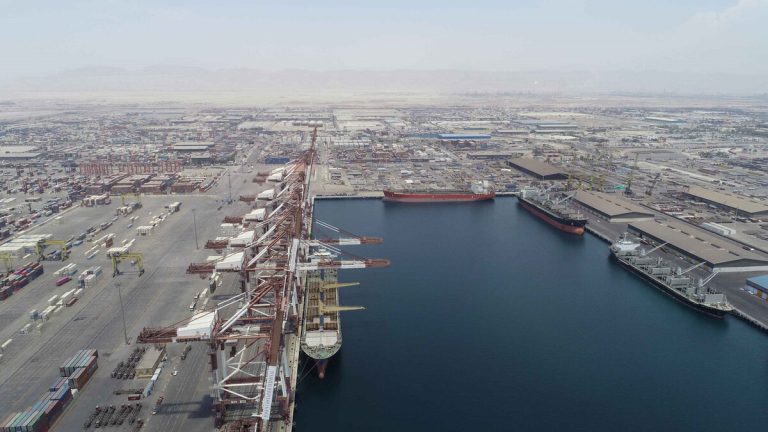
Yet Iran’s ports remain subject to American restrictions. The Strait of Hormuz continues to face serious disruption. Nuclear negotiations have not produced a comprehensive settlement, and the legal structure of US sanctions remains intact.
The immediate market reaction and the underlying strategic reality are therefore moving at different speeds.
The more consequential question is what happens over the remaining two years of Trump’s presidency—and beyond. Democratic control of Congress may alter the cost of military action, influence the terms of negotiations, reshape Republican foreign-policy debates and complicate the durability of any agreement with Iran.
It may also create expectations in Tehran that Washington is becoming more willing to compromise. Whether those expectations are justified could prove as important as the election itself.
What the election actually changed
The November result is a substantial institutional shift, but it is not equivalent to a change of government.
Trump remains president until January 20, 2029. Democrats will take control of Congress on January 3, 2027, giving them new authority over federal spending, congressional investigations, committee leadership and Senate confirmation of senior officials.
These powers can materially influence foreign policy.
Congress can demand detailed explanations of military operations, investigate decisions and contracts, scrutinize the conduct of the Defense Department and make future appropriations conditional on legislative negotiations.
A Democratic Senate can also shape the administration’s national security team through its authority over senior appointments.
But these mechanisms do not transfer command of the armed forces or control of diplomacy to Congress.
The president retains substantial executive authority. His veto can prevent legislation from taking effect unless two-thirds of both chambers vote to override it. Many measures also face procedural obstacles in the Senate.
As a result, the next two years could be characterized less by a coherent replacement of Trump’s policies than by persistent conflict over their implementation.
This distinction has particular significance for Iran.
Congress may make additional military operations harder to fund or politically defend without being able to prohibit them outright. It may demand negotiations without being able to dictate an acceptable agreement. It may investigate the effectiveness of sanctions without agreeing on which sanctions should be removed.
The Democratic victory therefore introduces additional checks on the administration, not a predictable alternative Iran policy.
The Republican divide may matter as much as the Democratic majority
One of the most revealing developments since the election has come from within Trump’s own political coalition.
Vice President JD Vance publicly attributed the Republican defeat in substantial part to the Iran war and its economic consequences. His argument reflects a broader concern among some conservatives that an extended foreign conflict conflicts with the domestic priorities and non-interventionist instincts of parts of the Republican electorate.
But that interpretation is contested.
In an editorial published after the election, The Wall Street Journal argued that openly emphasizing the administration’s need to end the war could weaken America’s negotiating position. Its editorial board maintained that the US blockade was creating leverage over Tehran and warned against making concessions simply because the war had become politically unpopular.
These positions expose a disagreement that cannot be reduced to a conventional left-versus-right divide.
One argument holds that continued military and economic pressure imposes substantial costs on Americans and may fail to produce a better settlement.
The opposing argument holds that reducing pressure prematurely could allow Iran to retain strategic leverage while avoiding meaningful nuclear or security commitments.
Both arguments contain questions that deserve serious examination.
Has the blockade created enough leverage to achieve American objectives, or has Iran demonstrated that it can prolong the confrontation despite economic damage?
Would a negotiated settlement reduce the long-term risk of another conflict, or merely postpone unresolved disputes?
And what constitutes success: preventing an Iranian nuclear weapon, securing unrestricted maritime passage, weakening Iran’s regional military capabilities, changing the behavior of its government—or some combination of these objectives?
The answers matter because different definitions of success imply different conditions for ending the confrontation.
The Republican debate also has implications beyond Trump’s presidency.
The 2028 presidential election will determine whether the next administration continues the present approach, modifies it or pursues a substantially different relationship with Iran.
Vance’s criticism of the war suggests that even within the party currently occupying the White House, the future direction of American policy is unsettled.
Iran’s long-term strategy must therefore account not only for the Democratic Congress taking office in January, but also for the internal struggle over what Republican foreign policy will look like after Trump.
A president with less political support still has consequential choices
The election has altered Trump’s incentives without eliminating his options.
A negotiated settlement could allow the administration to claim that sustained pressure produced nuclear concessions, restored maritime commerce and reduced the energy costs borne by American households.
Such an outcome would also remove a major source of political difficulty for Republicans approaching the 2028 election.
But Trump may not accept an agreement that he considers inconsistent with the strategic objectives of the war.
A settlement requiring Washington to abandon significant economic leverage without obtaining verifiable commitments from Tehran would face criticism from those who believe the existing pressure campaign should continue.
That creates the possibility of further coercive measures, even after an election in which voters expressed dissatisfaction with the conflict.
It also creates a third possibility: neither a comprehensive agreement nor a major new offensive, but a prolonged period of maritime restrictions, sanctions enforcement and intermittent negotiations.
This possibility deserves more attention than it generally receives.
In September, The Wall Street Journal reported that senior White House advisers had discussed the prospect of the Iran conflict continuing through the end of Trump’s presidency. Such a course would leave both sides attempting to manage a confrontation without achieving their larger objectives.
For Iran’s economy, an extended period of limited conflict could still be deeply damaging. Trade restrictions, uncertainty over shipping, disrupted financial channels and the costs of maintaining a high-security environment can affect commercial activity even in the absence of continuous large-scale attacks.
The outcome will depend less on the political character attributed to Trump than on how the administration evaluates the available alternatives.
Tehran must distinguish political weakness from negotiating weakness
From Tehran’s perspective, the Democratic victory could appear to strengthen Iran’s position.
The American electorate has demonstrated dissatisfaction with a war that has imposed substantial economic costs. The new Congress is expected to be more critical of military escalation. Some Republican figures are openly calling for a reassessment of the conflict.
Iranian officials may therefore conclude that Washington faces increasing pressure to reach an agreement.
That interpretation is understandable. It is not necessarily sufficient.
The United States retains military capabilities and sanctions authorities that do not disappear because the governing party has lost congressional majorities.
More importantly, a president who faces political pressure to reach a settlement may become less willing to accept terms that could be presented domestically as a defeat.
A similar calculation operates in the opposite direction.
Washington may believe that the economic pressure imposed on Iran is becoming increasingly difficult for Tehran to sustain. Iran, meanwhile, may calculate that it can absorb additional pressure longer than the American political system can tolerate economic disruption.
This creates an uncomfortable strategic possibility: both governments may believe time is working in their favor.
The result could be a prolonged bargaining impasse even when both sides have economic incentives to compromise.
The most productive diplomatic opening would arise not simply from American political weakness, but from a shared recognition that further pressure is unlikely to produce sufficient additional benefits.
Whether that recognition emerges remains uncertain.
The Strait of Hormuz is central, but it is not the entire settlement
Recent negotiations have exposed a fundamental disagreement about the sequence of concessions.
Iran has sought relief from the US blockade of its ports, improved access for oil exports and broader economic restrictions. Washington has sought nuclear and security commitments as part of a settlement.
The Strait of Hormuz has consequently become both a strategic bargaining instrument and a commercial indicator of diplomatic progress.
But reopening the waterway would not automatically restore Iran’s international trade.
A ship may be able to navigate the strait while remaining unable to load at a restricted Iranian terminal. A cargo may be physically transportable while the transaction that finances it remains prohibited. A bank may continue to reject a transaction even after an immediate security threat has diminished.
These distinctions are especially important for businesses evaluating the potential reopening of Iran’s market.
Commercial normalization depends on several interconnected conditions: maritime security, access to ports, applicable sanctions and licenses, payment infrastructure, insurance coverage and the willingness of counterparties to accept Iranian exposure.
They need not improve simultaneously.
A narrow maritime arrangement could relieve pressure on global energy markets without providing meaningful new opportunities for Iranian exporters.
A broader agreement might improve trade conditions while leaving financial institutions reluctant to reestablish relationships because of legal uncertainty or the possibility of sanctions returning.
Therefore, the economic significance of an agreement should be measured by the practical activities it permits, not solely by the diplomatic language announcing it.
Democratic control does not guarantee sanctions relief
An important misconception is that a Democratic Congress would naturally favor the removal of sanctions against Iran.
The record is more complicated.
US sanctions have been enacted and enforced under both Democratic and Republican administrations. They address multiple issues, including nuclear activities, missiles, human rights, terrorism-related designations and regional security.
The legislative and executive foundations of these measures differ.
Some restrictions can be modified through available executive authorities or statutory waivers. Others require compliance with conditions established by Congress or legislative changes.
The Congressional Research Service noted in its November 3 update that Congress has repeatedly shaped the legal framework of Iran sanctions. In 2026, lawmakers extended the Iran Sanctions Act’s expiration date from 2026 to 2031.
That extension illustrates a crucial point: the sanctions architecture can outlast individual administrations and electoral cycles.
A future nuclear agreement would also be subject to congressional review requirements under the Iran Nuclear Agreement Review Act. During the applicable review period, the president is restricted from implementing certain forms of statutory sanctions relief.
Consequently, congressional control could influence both the negotiation and implementation of an agreement.
A Democratic majority might support some diplomatic measures while remaining unwilling to remove sanctions associated with non-nuclear activities. Individual lawmakers may also disagree about inspection requirements, enforcement mechanisms and the conditions for providing economic relief.
For Iran, obtaining political commitments from Washington is only part of the challenge.
An economically meaningful settlement would need sufficiently clear and durable legal arrangements to convince businesses that authorized transactions can be completed without unacceptable risk.
That is a more demanding threshold than a ceasefire.
Regional governments have their own interests
The election’s consequences cannot be understood solely through Washington and Tehran.
For Gulf governments, the conflict presents overlapping but distinct concerns.
Saudi Arabia, the United Arab Emirates, Qatar and Oman all have strong economic reasons to support predictable maritime access and regional stability. Yet their security relationships, energy interests and diplomatic roles differ.
A prolonged conflict threatens shipping, investment planning and infrastructure across the region. Conversely, a settlement that leaves major security concerns unresolved may also be regarded as unstable.
Qatar’s mediation efforts illustrate the importance of regional diplomacy in translating military pressure into workable political arrangements.
Oman, with its established diplomatic channels and interest in regional commerce, also has reasons to support a reduction in confrontation.
Israel’s calculations differ in important respects. Its government continues to regard Iran’s military and nuclear capabilities as significant security threats, and any settlement could be influenced by Israeli concerns over verification, regional deterrence and future threats.
China, a major destination for Middle Eastern energy, has incentives to restore predictable supply conditions. Russia has its own strategic interests in the regional balance and in relations with both Tehran and Washington.
None of these actors fully controls the outcome. Each can, however, affect the incentives and options available to the principal parties.
A sustainable agreement would therefore need to address more than the immediate preferences of the American and Iranian governments.
It would have to operate within a regional environment where different countries attach different meanings to security, stability and acceptable risk.
What the election means for Iran’s economic outlook
The strongest immediate market signal came from oil.
Brent’s sharp decline after the elections reflected an expectation that divided government could reduce the risk of further escalation and eventually restore disrupted energy flows.
But the price of oil measures market expectations as well as physical supply conditions.
The distinction matters because the economic impact of the conflict extends beyond crude production.
Restrictions on maritime trade have affected shipping costs, insurance, refined petroleum products and supply chains. Restoring confidence across these systems could take longer than the political process that initiates a settlement.
For Iran, there is an additional asymmetry.
A reduction in regional conflict might benefit the broader Gulf economy before it materially improves Iranian trade. Other producers may regain market access or lower shipping costs while Iranian exports remain restricted by sanctions or port-specific measures.
Similarly, a decline in international oil prices may provide relief to global consumers without directly improving Iran’s fiscal position.
This means that a diplomatic breakthrough could produce very different economic outcomes for different countries.
Iranian businesses and foreign investors would need to distinguish between an improved regional outlook and actual improvements in Iran’s access to finance, technology, equipment and international customers.
The former could emerge quickly. The latter depends on more durable policy changes.
The significance of 2028
The next US presidential election adds a further dimension to the current uncertainty.
Trump’s remaining term extends through January 2029, but his successor’s policy preferences will begin to influence strategic calculations well before then.
A future Republican administration could preserve the current framework of economic pressure while modifying its willingness to use military force.
A Democratic administration might pursue greater diplomatic engagement, although its position on sanctions and regional security cannot be assumed in advance.
Domestic political divisions within both parties make it difficult to treat either outcome as a simple continuation of past policies.
This creates a problem for any agreement reached during Trump’s remaining term.
If Washington and Tehran negotiate a settlement, they must consider whether its legal provisions and political support are sufficient to survive a change of administration.
The experience of the 2015 nuclear agreement, followed by the American withdrawal in 2018, demonstrates why such concerns are not abstract.
A deal that depends almost entirely on presidential discretion may be easier to conclude but more vulnerable to reversal.
A framework with broader legislative support could be more politically durable, although obtaining that support may require more demanding terms and extensive negotiations.
The implications extend directly to investment.
Companies considering large, long-term commitments to Iran will evaluate not only current permissions but also the risk that those permissions could change before their investments generate returns.
For major projects in energy, mining, manufacturing and infrastructure, policy durability can matter as much as the initial opening.
The 2028 election therefore belongs inside the economic analysis of any potential settlement reached in 2027.
Three possible directions for the next phase
The new political balance creates several possible paths, each with different implications for Iran and regional commerce.
A negotiated but limited settlement
Washington and Tehran agree on reciprocal steps that reduce military tensions, restore some maritime access and establish an arrangement for addressing nuclear concerns.
This could lower shipping and insurance risks while allowing certain commercial activities to resume.
However, a limited agreement might leave substantial sanctions intact. International businesses would still need to evaluate which transactions had become legally and operationally feasible.
Prolonged pressure under divided government
The White House maintains its economic and maritime pressure while the Democratic Congress challenges the costs, conduct and objectives of the confrontation.
Negotiations continue intermittently, but neither government accepts the other’s principal conditions.
For Iran, this would mean continued uncertainty even without a return to sustained large-scale combat.
For regional businesses, the result could be a difficult environment in which commercial planning remains vulnerable to sudden security and regulatory changes.
Renewed escalation followed by another diplomatic attempt
The administration concludes that additional pressure is necessary to change Iran’s position, or negotiations break down amid disagreements over nuclear commitments, shipping access or the sequence of concessions.
Further military operations could increase the immediate costs of confrontation and complicate future negotiations.
But escalation would not necessarily settle the underlying issues, and a subsequent diplomatic process could still be required.
The important point is that the election does not uniquely determine which path will unfold. The same institutional changes can influence decision-makers differently depending on their objectives and assessment of leverage.
The indicators that matter more than political statements
For companies, investors and policymakers, the practical consequences of the midterms will become clearer through observable changes.
Congressional budget decisions, defense authorization measures and investigations will reveal how much pressure the Democratic majority can exert on the administration.
The positions adopted by Republican leaders and prospective 2028 presidential candidates will indicate whether support for continued military pressure remains politically sustainable within Trump’s own party.
Negotiation proposals should be assessed through their sequencing, verification arrangements and implementation provisions rather than optimistic announcements.
Maritime data, port restrictions, insurance conditions and changes in sanctions authorizations will provide more concrete evidence of commercial reopening than movements in oil prices alone.
Finally, the response of financial institutions and major trading companies will show whether diplomatic developments have begun to reduce the practical risks of doing business with Iran.
These indicators should be monitored separately. Political de-escalation, sanctions relief and commercial normalization are related developments, but they are not interchangeable.
A different Washington does not yet mean a different relationship with Iran
The Democratic victory represents a meaningful change in American politics. It has ended unified Republican control of Washington, increased the institutional scrutiny facing Trump and accelerated debate about the future of Republican foreign policy.
It has also demonstrated that the economic costs of the Iran conflict can influence American electoral outcomes.
But the fundamental disputes remain.
Washington continues to seek assurances over Iran’s nuclear and security activities. Tehran continues to demand relief from economic and maritime restrictions. Regional governments remain concerned about both prolonged conflict and the terms of a possible settlement.
The new Congress can change the political incentives surrounding these disagreements without resolving them.
Over the next two years, the most important development may not be a simple choice between peace and renewed war. It may be a gradual redefinition of what the United States considers an acceptable outcome in Iran—and of how much economic and military pressure American political institutions are prepared to sustain.
That process will unfold alongside a Republican debate over the post-Trump future, the approaching 2028 presidential election and Iran’s own calculations about whether continued resistance or negotiated compromise offers better prospects.
For the Iranian economy, the stakes extend beyond the immediate conflict.
A settlement could improve regional stability without fully reopening Iran’s markets. A prolonged confrontation could continue to restrict trade even without major new military operations. A more durable political arrangement could create genuine commercial opportunities, but only if the legal, financial and operational barriers to international business are addressed.
The election has changed the balance of power in Washington. Whether it changes Iran’s place in the regional and global economy will depend on what both governments—and the political institutions around them, do with that change.
Sources and further reading
- Associated Press — Democrats win both chambers of Congress, November 3, 2026
- Reuters — Five ways US foreign policy may change with a Democratic Congress, November 4
- Council on Foreign Relations — Implications for US foreign policy, November 4
- The Wall Street Journal — Trump’s advisers consider a prolonged Iran conflict, September 10
- Reuters — Iran-US negotiations through Qatari mediation, November 2
- Congressional Research Service — US Sanctions on Iran, updated November 3
- US Code — Congressional review of agreements with Iran
- Reuters — Oil markets react to the US election, November 5