BRICS and Iran: What Is Actually Usable for Trade?
Beyond the rhetoric of a new economic order, the practical question for Iranian businesses is simpler: what can BRICS actually change in a transaction…
Read article →
Trade & Transit covers Iran’s role as an import, export, customs, port, free-zone, border, and corridor economy. It matters because Iran’s geography becomes investable only when goods can move through real routes, credible partners, clear documentation, and workable logistics infrastructure.
Use these segments to move from the parent market into more specific investable routes, operating constraints, and demand pockets.
Corridors cover Iran’s trade and transit routes: road, rail, port, border, pipeline, and logistics pathways that move goods across the country and…
SegmentCustoms covers the border, documentation, inspection, tariff, clearance, and compliance layer that determines whether goods can practically enter, leave, or move through…
SegmentExports covers Iran’s outward flow of goods and services, including petrochemicals, minerals, metals, agriculture, food products, industrial goods, and regional trade. It…
SegmentFree Zones covers Iran’s special economic and trade areas designed to support investment, logistics, manufacturing, re-export, customs facilitation, and regional market access.…
SegmentImports covers the inward flow of machinery, raw materials, intermediate goods, consumer products, medical supplies, technology, spare parts, and industrial inputs into…
SegmentPorts covers Iran’s maritime gateways on the Persian Gulf, Gulf of Oman, and Caspian Sea, including container, bulk, oil, petrochemical, general cargo,…
SegmentSpecial Zones covers Iran’s designated economic, industrial, logistics, port-adjacent, and trade-oriented areas that offer structured sites for production, warehousing, import-export activity, and…
Iran’s trade and transit market is one of the most practical entry lenses for investors because it connects external demand, domestic production, regional geography, and operational execution. The opportunity is strongest where trade flows solve real problems: importing essential inputs, exporting resource-linked products, serving regional markets, using ports and borders efficiently, and building logistics services around bottlenecks. Iran’s position between the Persian Gulf, Caspian region, Central Asia, the Caucasus, Iraq, Turkey, Afghanistan, Pakistan, and domestic industrial provinces creates strategic potential, but route-level execution determines whether that potential is real. For investors, this market is about corridors, compliance, customs, storage, partner quality, and route economics rather than broad geopolitical slogans.
The market includes ports, free zones, special zones, customs offices, border crossings, trucking fleets, rail links, warehouses, cold-chain providers, exporters, importers, brokers, freight forwarders, shipping agents, industrial producers, and trade-service firms. Different routes serve different cargo: container imports, petrochemicals, minerals, food, construction materials, machinery, consumer goods, and regional re-export flows. Gateway provinces handle external access, Tehran and major industrial provinces concentrate demand, and border provinces connect Iran to regional trade. Performance depends on customs procedures, sanctions exposure, documentation, infrastructure quality, storage, payment routes, and local partner reliability.
Trade & Transit is relevant for market entry, route selection, import-export planning, warehouse placement, free-zone evaluation, distributor search, customs-risk review, and supply-chain mapping. It helps investors identify where goods can actually move, which provinces serve as gateways, and which logistics gaps create service opportunities. This market is also central for assessing export-oriented industries, import-dependent manufacturing, regional trade strategies, and infrastructure assets such as ports, dry ports, rail lines, border crossings, and industrial zones.
Investment cases examining Trade & Transit through specific locations, constraints, companies, and entry routes. Related comparisons using one or more of these cases are included in the same view.
Shalamcheh Border Crossing is a Khuzestan road gateway serving Iraq’s Basra Governorate and wider southern Iraqi destinations. Reported freight activity was more than…
Mehran is an Ilam Province border city whose trade-and-transit relevance is concentrated in the Iraq-facing Mehran border corridor. Available reporting states that more…
A risk-and-resilience comparison of Shalamcheh Border Crossing and Mehran for exporters, suppliers and traders using export or supply contracts into Iraq.
Investment ideas connected to this market through buyer demand, entry routes, supply gaps, and execution constraints.
Research, briefs, and analysis assigned to this market will appear here automatically.
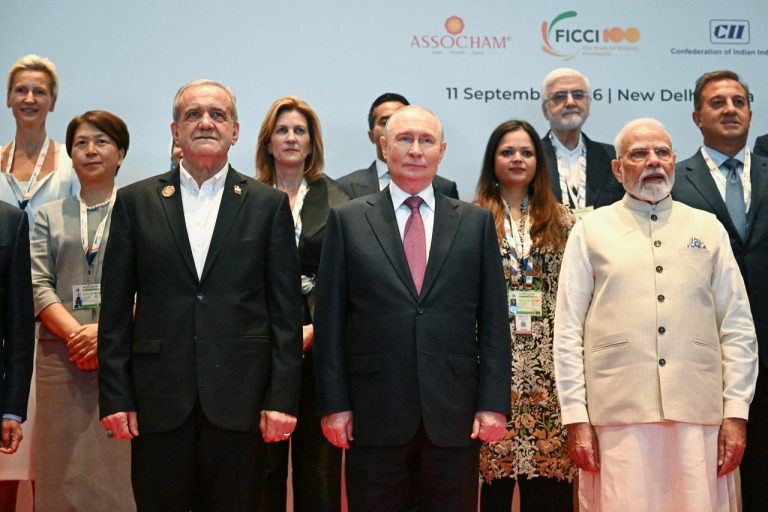
Beyond the rhetoric of a new economic order, the practical question for Iranian businesses is simpler: what can BRICS actually change in a transaction…
Read article →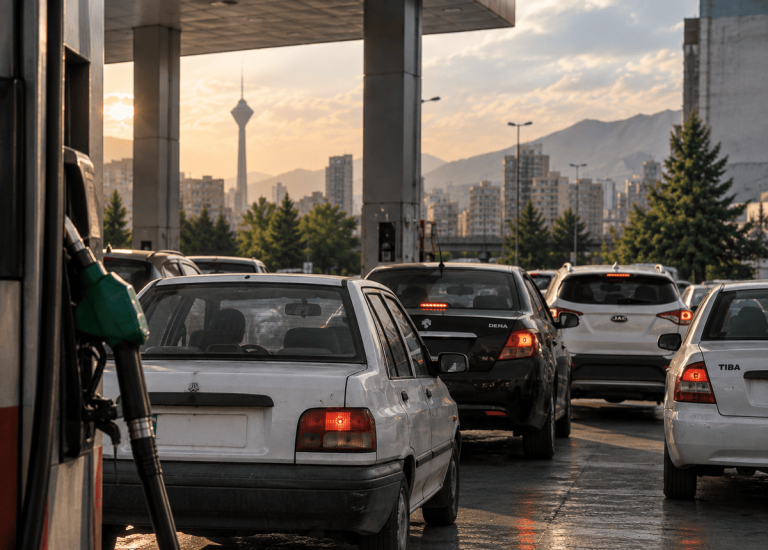
Iran has changed the price of gasoline again, but the significance of the decision extends well beyond what motorists will pay at the pump.…
Read article →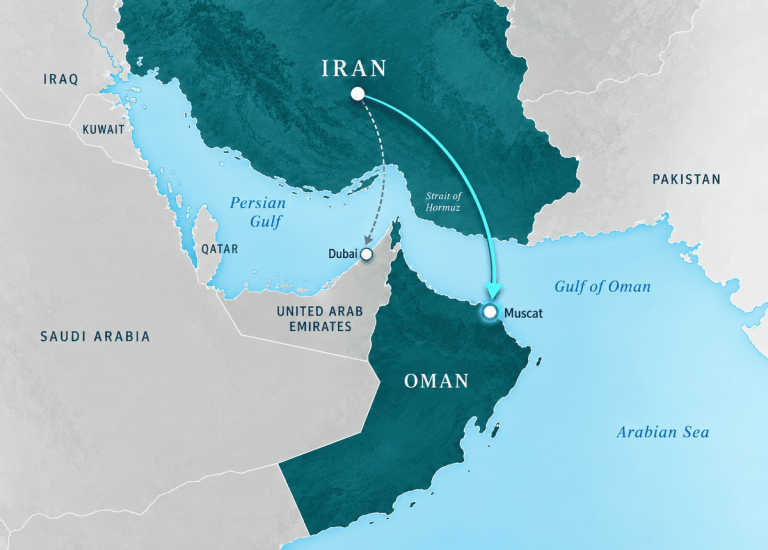
For more than two decades, Dubai was the natural offshore base for a large part of Iranian private business. Geography was only one reason.…
Read article →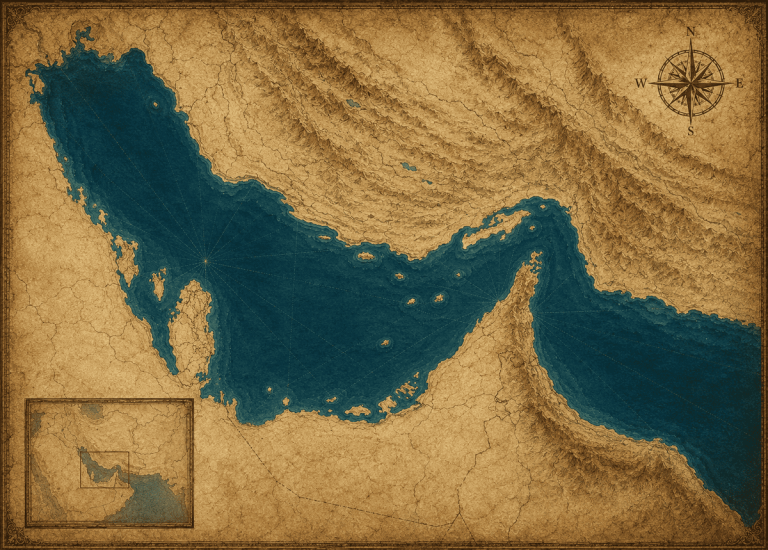
Iran’s islands in the Persian Gulf are often discussed individually. Kish is associated with tourism. Qeshm with trade and free-zone activity. Kharg with oil…
Read article →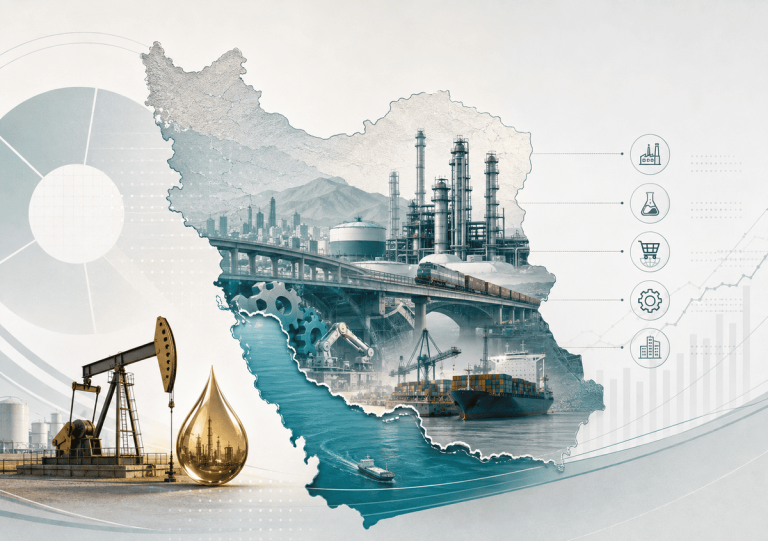
It is easy to describe Iran as an oil economy. The country holds some of the world’s largest hydrocarbon reserves. Oil exports have shaped…
Read article →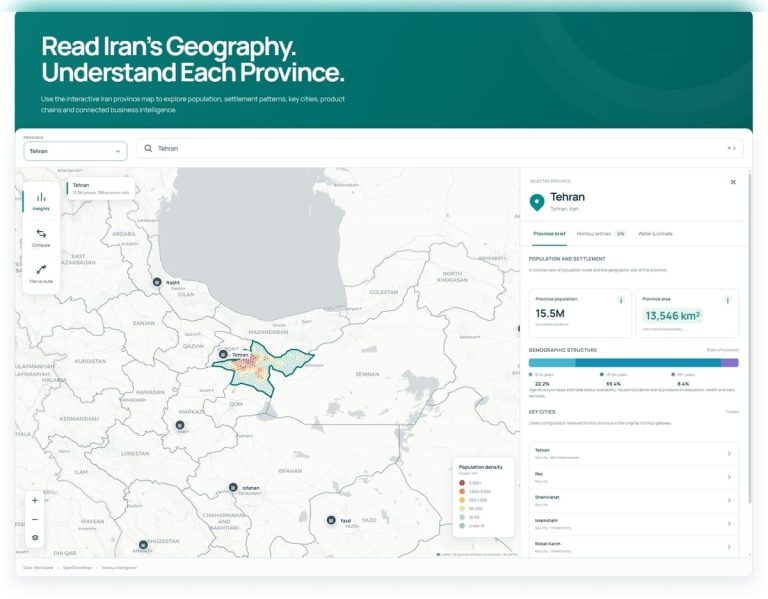
A map can show where a province is. It cannot, by itself, explain what that province means. Iran’s provinces differ not only in size,…
Read article →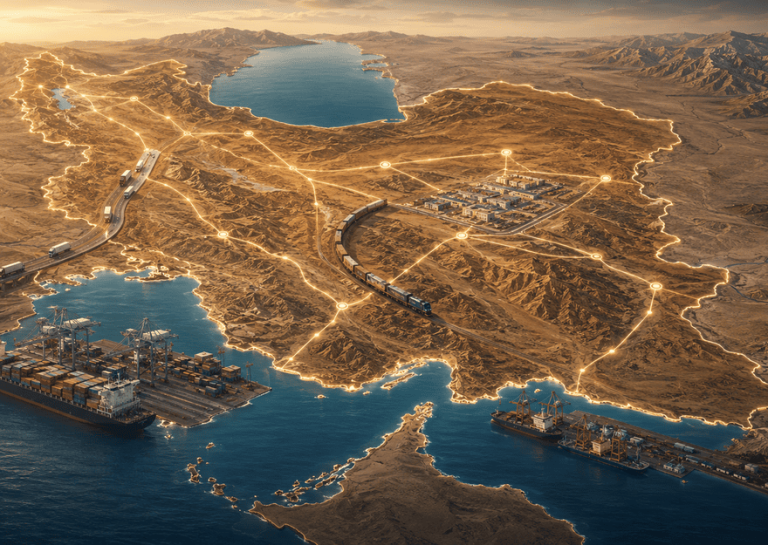
Transport corridors are often presented as coloured lines joining ports, borders and capitals. On those maps, Iran appears almost perfectly placed: the Persian Gulf…
Read article →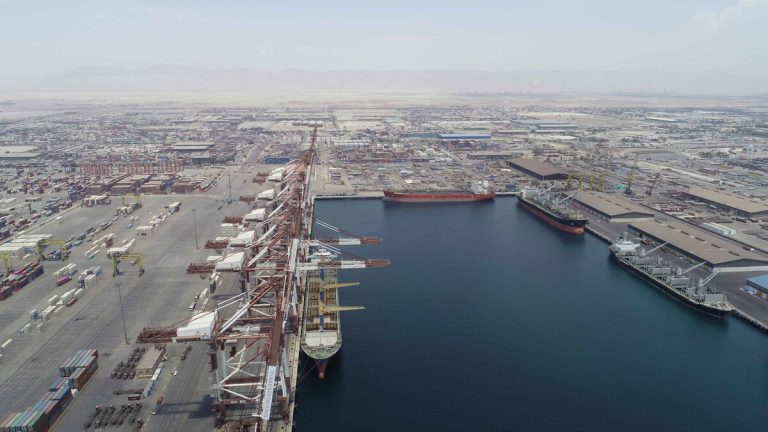
Attacks around Bandar Abbas are turning a maritime confrontation into a national logistics problem. The damage will be measured in delayed cargo, higher working-capital…
Read article →
Iran is often described as economically isolated.That description is only partly correct. Iran sits outside important parts of the Western-led financial and trading system,…
Read article →